International Partnership Enables Province-Wide Expansion of District Peace Committees Across Sindh
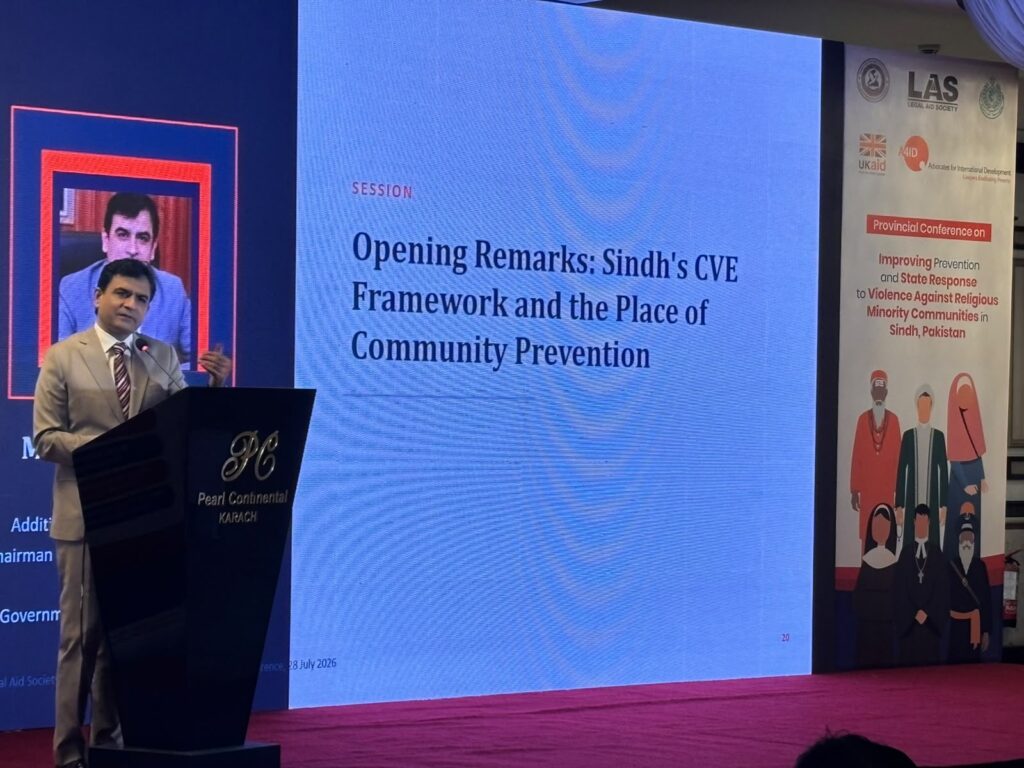
A community-led peacebuilding model, strengthened through UK-Pakistan legal collaboration, moves towards provincial institutionalisation, with potential to support conflict prevention, counter violent extremism and address violence against women across Sindh.
Advocates for International Development (A4ID) has welcomed a significant milestone in Pakistan, where the Government of Sindh has committed to making the District Peace Committee model a province-wide approach, marking an important step towards institutionalising community-led mechanisms for peacebuilding and conflict prevention.
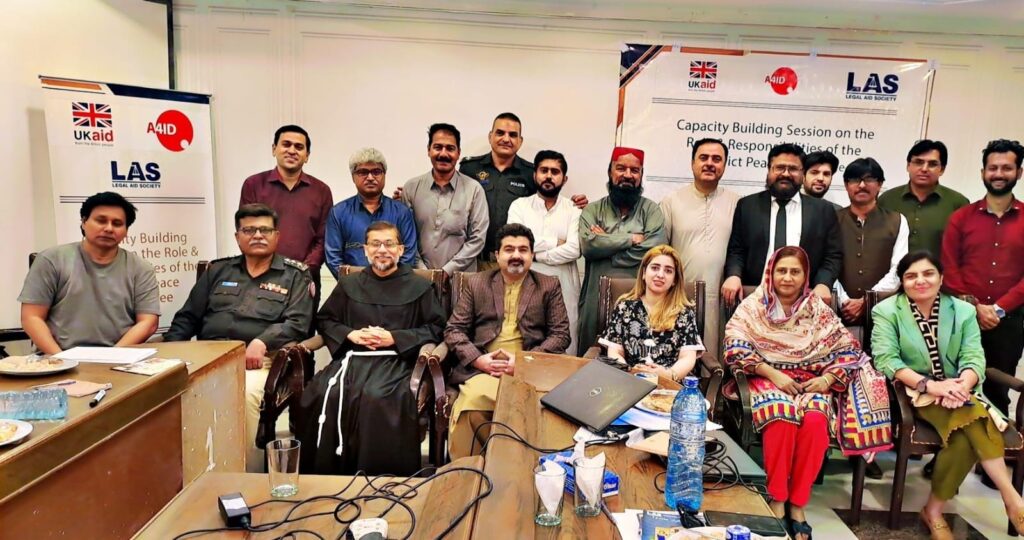
The expansion follows the operationalisation of District Peace Committees in four districts of Sindh, supported through targeted training and the development and adoption of new Standard Operating Procedures (SOPs) by the Legal Aid Society (LAS), with specialist legal expertise from the UK facilitated through A4ID.
District Peace Committees are community-based peacebuilding and conflict-prevention mechanisms that bring together representatives from different faiths, communities and local institutions. They provide a forum to identify emerging tensions, encourage dialogue and support peaceful, locally led solutions to disputes. By creating mechanisms through which concerns can be addressed before they escalate, the model supports stronger relationships between communities and contributes to more inclusive and peaceful local environments.
A significant development is that the SOPs have now been adopted within Sindh’s Countering Violent Extremism (CVE) framework. This extends their relevance beyond freedom of religion or belief (FoRB) cases, providing a framework that can contribute to wider efforts to prevent violent extremism and address violence, including violence against women.
The development therefore represents more than the expansion of an individual mechanism. It provides an opportunity to embed a community-led approach to prevention and peacebuilding within provincial systems, while retaining its grounding in local communities and institutions.
From local practice to provincial institutionalisation
The adoption of the SOPs is an important step towards taking a model that has been operationalised in four districts and establishing a consistent framework for its implementation across Sindh.
The SOPs provide practical guidance for District Peace Committees and create a basis for their wider application within the provincial CVE framework. Their adoption provides an opportunity to strengthen institutional capacity and support a more consistent approach to community-level peacebuilding and conflict prevention across the province.
The wider significance of the model lies in its potential to bring together community representatives and local institutions to address tensions and disputes through dialogue and mediation, while also contributing to broader efforts to prevent violent extremism.
Its application within the CVE framework also creates scope for the approach to contribute to efforts to address violence against women, demonstrating how community-based mechanisms can have relevance beyond their initial focus on FoRB-related concerns.
Turning legal expertise into practical impact
The work builds on A4ID’s long-standing support for the Legal Aid Society through the UK Government’s ROLE UK Programme, connecting LAS with UK legal experts to develop practical legal guidance that can be implemented by government and communities.
The partnership brings together two complementary forms of expertise: the specialist legal knowledge of UK lawyers and the Legal Aid Society’s understanding of Pakistan’s legal, institutional and community context.
This combination has enabled legal expertise to be translated into practical tools designed for use in the local context, with the potential to be adopted and applied at a much broader scale.
For A4ID, this is at the heart of the value of mobilising legal expertise for international development: not simply providing advice but working with local partners to help create approaches that can strengthen institutions and contribute to lasting change.
Strengthening freedom of religion or belief and wider prevention
Freedom of religion or belief remains an important dimension of the District Peace Committee model. Bringing different faith and community representatives together creates space for dialogue, the identification of tensions and the peaceful resolution of disputes.
The adoption of the SOPs within Sindh’s CVE framework demonstrates the broader relevance of this approach. It creates a framework through which community-led peacebuilding can contribute to wider efforts to prevent violent extremism, while also providing scope to address other forms of violence and vulnerability, including violence against women.
The model therefore illustrates how strengthening inclusive, community-level mechanisms can support both the protection of rights and wider approaches to building peaceful and resilient communities.
A milestone for international collaboration
The expansion of the District Peace Committee model demonstrates the potential of international legal collaboration when it is rooted in local expertise, partnerships and ownership.
Rather than seeking to impose an external solution, the partnership has supported the development and operationalisation of practical guidance grounded in the local context, and its subsequent adoption within a provincial government framework.
It also demonstrates the wider contribution that legal expertise can make to the Sustainable Development Goals, (SDG 16) particularly through stronger institutions, inclusive governance, access to justice and the protection of rights.
Commenting on the milestone, A4ID CEO Yasmin Batliwala MBE, Hon LLD, said: “The significance of this achievement lies not simply in the expansion of District Peace Committees, but in what it demonstrates about the power of legal expertise to turn locally rooted ideas into sustainable institutional change. Through our partnership with the Legal Aid Society, UK legal expertise has been brought together with deep local knowledge to develop practical tools that can now support a model with province-wide potential. This is what meaningful international collaboration should achieve: not solutions imposed from outside, but local capacity strengthened, systems made more effective, and communities better equipped to prevent conflict and protect rights. It is a powerful demonstration that when the law is placed in the service of people and combined with trusted local leadership, it can become a force not only for justice, but for prevention, peace and lasting change.”
As the model moves towards expansion across Sindh, A4ID looks forward to continuing its partnership with the Legal Aid Society and supporting efforts to strengthen inclusive, community-led approaches to justice, conflict prevention and peacebuilding.
The milestone is a powerful example of how legal expertise, when combined with local knowledge and trusted partnerships, can move from advice to action, and from individual interventions towards lasting institutional change.
Read our previous article:
Strengthening Freedom of Religion or Belief in Pakistan through District Peace Committees, which explores how the model supports inclusive, community-led approaches to conflict prevention and access to justice.