Viewing archives for Rule of Law

Legal Solutions for Sustainable Futures in South Asia: How Pro Bono Contributes to SDG Progress

This year marks the midpoint of the UN SDGs, during which stakeholders worldwide have converged to exchange insights on the strides made so far and to complement efforts for the challenges ahead. The actions taken to revive the SDG agenda have ignited imaginative initiatives, yet they’ve also encountered formidable hurdles. As we navigate this intricate landscape, A4ID partners globally exemplify diverse contributions to SDG success, with the legal community emerging as essential allies to the cause.

Commissioned as part of A4ID’s Rule of Law Expertise (ROLE UK) Programme and in celebration of A4ID’s expanding network of change leaders in South Asia, the unique case studies and insights presented in this report provide the necessary focus on our work, inspire you and other legal professionals in the region to
get involved, fortifying our collective resolve to build upon the compelling and essential case for change.

Download the Executive Summary

Download the Regional Snapshot

Download the Report on Bangladesh and SDG 5

Download the Report on Nepal and SDG 13

Download the Report on India and SDG 16

Legal Solutions for Sustainable Futures in South Asia serve as a remarkable testament to demonstrate what is achievable.

Yasmin Batliwala MBE, Chief Executive, A4ID

Shaping the Future: Lawyers at the Vanguard of AI and Sustainable Development

On the 1 and 2 November the first ever global artificial intelligence (AI) Safety Summit will be held in London. Its focus is to “fully embrace the extraordinary opportunities of AI” and “to ensure it develops safely in the years ahead” according to our Prime Minister, Rishi Sunak. An essential prerequisite to success appears to be the need to work closely with leading nations to agree a shared approach to harness AI for international development.

Certainly, as AI continues to advance at an extraordinary pace, understanding its likely impact is paramount and more so in countries in the Global South. For this reason, the role of the law and lawyers in shaping this transformation is of utmost importance and requires utmost speed.

AI is transforming our world, offering solutions to complex challenges. One of the most pressing global initiatives is the UN Sustainable Development Goals (SDGs) which represent a shared vision for a better future. These 17 goals aim to address various issues from poverty and hunger to climate change and gender equality. SDG 17, “Partnership for the Goals,” encompasses two vital targets, 17.7 and 17.8, emphasising the necessity of sustainable technologies in developing nations. Moreover, SDG 9 focusing on “Industry, Innovation and Infrastructure” whose target SDG 9.8 emphasises universal access to information and communications technology as a cornerstone for ensuring equal access to information and financial markets, in turn facilitating job creation and resilient infrastructure. The critical role of technology makes it a linchpin for attaining all the SDG targets by 2030.

AI’s Current Role in SDG Implementation

In a world witnessing an unprecedented pace of technological advancement, AI has taken undoubtably taken centre stage. The proliferation of AI, facilitated by user-friendly platforms like ChatGPT, has made it more accessible than ever. Consequently, it is unsurprising, that AI is increasingly seen as the solution to achieving SDGs. Predictive AI, for example, is being rapidly deployed in the Global South for agriculture, healthcare and infrastructure as a means of reducing inequality in resource-constrained environments. In areas where a shortage of skilled personal hampers efforts to tackle socio-economic and political problems perpetuating inequality, AI can be harnessed to asses causes and solutions.

One salient application of AI is in drone technology. Drones have been implemented in the Global South as a means of delivering essential medical and agricultural supplies to remote areas that are hard to reach by traditional means. They are also used for aerial observation, improving agricultural methods, enhancing crop productivity, and providing farmers with real-time data on their crops. Al technology opens doors to rapid development opportunities for the Global South, bypassing the otherwise costly and time-consuming processes. However, as reliance on AI grows, so do concerns about its potential negative consequences.

The Ethical and Regulatory Challenges

Alongside the development sector, AI has attracted interest and investment from international businesses raising ethical concerns. The absence of a comprehensive regulatory body overseeing AI’s development, deployment, and use has given rise to worries regarding corporate interests.

AI algorithms, designed by humans, have been found to perpetuate biases existing in society. Reports have shown that AI used in Courts displayed racial biases, affecting the risk assessment of prisoners. Similar biased systems are used in crime hotspot identification, potentially resulting in disproportionate police presence in predominately black areas. Furthermore, AI used in recruitment websites such as Linkedin has shown preferences for male names in searches, all demonstrating serious implications for equality and justice.

AI software is rapidly entering decision-making processes for asylum-settlement cases which are governed by international law and involve life or death decisions. AI must be free from bias to uphold the principles of non-refoulement and non-discrimination. Unfortunately, there are cases occurring already where claimants were denied asylum status based on poor AI translations.

Whilst the European Parliament has prohibited the use of facial recognition surveillance technology, it failed to ban ‘discriminatory profiling and risk assessment systems to control border movements’ for refugees and asylum seekers. Amnesty International has called for a ban on the use of such technology in asylum cases, arguing that there is ‘no human rights compliant way to use remote biometric identification’.

The hoarding of this data exposes migrants to security breaches, which could result in serious safety concerns if data falls into the hands of the actor or state they are seeking refuge from. In 2021, thousands of Rohingya refugees had their personal biometric data passed on to the Bangladeshi government, which then passed the data on to authorities in Myanmar. For many the result of this data breach has been involuntary repatriation to Myanmar. While everyone has the right to the protection of personal data, refugees and asylum seekers are particularly vulnerable to breaches of this right, given their unfamiliarity with EU systems and willingness to comply in the pursuit of asylum.  

The collection of data using AI is a widely debated topic. While wealthy nations have put policies into place governing AI-collected data, countries in the Global South often lack the same protections. Moreover, AI developed in the Global North and deployed in the Global South may echo colonial structures of power given the  imbalance of representation in development and decision making. UK tech firms such as Cambridge Analytica have already set a poor precedent in this area by working with foreign governments during election campaigns. Using data mined through Facebook, Cambridge Analytica played a large role in the election campaign of Kenya’s former president – Uhuru Kenyatta. In doing this, Cambridge Analytica broke UK and EU data privacy laws; however, as Kenya had less stringent laws in place, they were able to employ these methods. Not only does this pose problems around the protection of individuals’ data, it also raises questions around the exploitation of lack of AI awareness in the Global South as a means for Global North companies to interfere in their politics.

The Environmental Footprint

In addition to ethical implications, unregulated AI use has environment consequences which have been relatively unexplored. Data storage centres that AI relies on consume a staggering amount of power and water, with some reports suggesting ChatGPT emits 8.4 tons of  carbon dioxide per year and that 700,000 litres of fresh water were used during the development of ChatGPT. While these instances are not independently enough in themselves to raise the alarm, the growth projection of AI suggests the environmental impact could become a major cause for concern.

As AI’s growth continues, these environmental impacts could become significant. Notably, while the Global North benefits from AI development, the Global South bears the brunt of climate-related disasters, which may worsen with AI’s expansion.

The Role of Lawyers and Advocacy

Amid these challenges, lawyers and activists have a unique role to play. While AI is still in its infancy, they can shape the regulations that protect the privacy and interests of the most vulnerable. Policy recommendations include:

In conclusion, the 2023 AI Safety Summit presents a significant opportunity to address the multifaceted impact of AI on the Global South. While AI holds the potential to uplift economies, revolutionise healthcare and education and ensure food security, it also brings the risks of economic disruption, ethical concerns, technological dependence, and environmental challenges. The key to realising the benefits of AI in the Global South lies in responsible and equitable development, guided by international cooperation and ethical principles. While AI raises significant questions and challenges, it also offers promise and hope to the development sector.

Finally, the role of the law in shaping this landscape cannot be overstated. Legal frameworks have the potential to safeguard ethical AI practices, protect vulnerable populations, promote economic growth, and reduce environmental harm. Lawyers have the opportunity to lead the way in shaping the ethical and regulatory landscape of AI to ensure its responsible and equitable use. Advocates for International Development (A4ID) is committed to being at the forefront of the AI dialogue and urges the legal profession to work together with us to pursue research into the use and regulation of AI technology through its SDG Legal Initiative, a knowledge hub for lawyers dedicated to sustainable development. Together we can harness AI’s potential while safeguarding the rights and wellbeing of all and in so doing make this vision a reality.

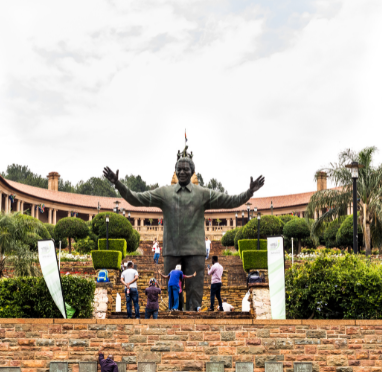
CEO Insight: SDG 16, Honouring Nelson Mandela’s Legacy

Earlier this month, on July 18th, the world came together to remember the profound impact of Nelson Mandela and his unwavering dedication to justice. His anti-apartheid activism has left an indelible mark, inspiring and guiding our pursuit of a fair and just world. 

Mandela’s legacy is a beacon that continues to inspire and instruct our pursuit of justice, setting a remarkable example of resilience and determination. During his 27 years in prison, he catalysed global prison reforms while relentlessly advocating for the human rights of all, even from behind bars.

To this day, Mandela’s vision resonates across the globe, influencing human rights policies and inspiring movements toward inclusive, non-discriminatory societies. The UN’s ‘Nelson Mandela Decade of Peace’  (2019 – 2028) aligns with Mandela’s principles and is firmly embedded in the Sustainable Development Agenda (SDGs) (SDGs). SDG 16, dedicated to Peace, Justice, and Strong Institutions, echoes the values at the core of Mandela’s efforts against racism and for equality, calling for effective transparent institutions and non-discriminatory laws and policies.

The UN’s Adoption of The Mandela Rules

One of Mandela’s greatest contributions to the world of justice is the Mandela Rules, a set of principles promoting humane conditions for prisoners. During his imprisonment, Mandela devoted himself to legal studies, familiarising himself with legal rights and tirelessly advocating for improved treatment of prisoners. Mandela saw his firsthand experiences and observations of the dire conditions endured by black prisoners, as directly linked to the apartheid who were often treated like mere ‘cattle,’; the prison work and hunger strikes organised by Mandela and his comrades in 1966, led to transformative changes in the treatment of black prisoners. 

In 2015, the UN officially adopted the Mandela Rules, outlining obligations to uphold the inherent dignity of all prisoners as human beings. These rules mandate access to medical and health services, legal representation, and training for prison staff to ensure best practices when dealing with vulnerable groups. Crucially, they underscore the notion that prisoners remain part of wider society, promoting social cohesion and recognising their potential for growth and positive contributions even while incarcerated.

Prison Conditions across Africa Today

Despite the progress made since the adoption of the Mandela Rules, challenges persist, particularly concerning prison overcrowding. Over 121 countries and territories are operating above official capacity, some at levels of 250%, leading to life-threatening conditions and hindering proper prison functioning. Prison conditions across Africa are particularly challenging. Solitary confinement, inadequate healthcare, and the spread of infectious diseases which have higher prevalence rate in prisons.

Overcrowding not only jeopardises lives but also hampers effective rehabilitation and educational programmes, hindering prisoners’ reintegration into society upon release.  The roots of this issue lie in poor criminal justice policies rather than rising crime rates, where Conditions in African prisons remain some of the poorest in the world, and they are deeply entrenched in Africa’s colonial past, with prisons above capacity since their inception. Moreover, resource scarcity across the continent has long hindered much-needed prison reforms. High rates of pre-trial detention and overuse of prison sentences for minor offences, contribute to severe overcrowding, highlighting the need for trained judges and proper legal representation. Recent reports into prison conditions in Nigeria have shown over 60% of prison admissions, are still awaiting trial

The issue of police brutality further compounds problems in the justice sector, particularly in South Africa, where cases of brutality are alarmingly high, with over 5,500 cases reported each year. Suspects are often brutally beaten, even when not resisting arrest, in order to intimidate and instil fear. And 95% of cases of police brutality end with no sanctions against the officers, allowing the practice to continue. Such acts undermine trust between communities and law enforcement agencies, perpetuating conflict and mistrust. Police brutality in South Africa is systemic of its complex history, as the police are primarily seen as a repressive force, used to control a population or protect the interest of a particular group. Addressing this issue requires reimagining the role of the police force as protectors of all society, rather than a repressive entity serving elite interests. By promoting respect, transparency, and accountability, we can pave the way for a more just and harmonious society.

Policy Recommendations

To address these challenges, legal professionals, have a vital role to play in advocating for change. Our collective efforts can bring about transformative change, just as Mandela’s unwavering determination did. Let us therefore stand united in the pursuit of justice by:

Improving access to justice is pivotal in ensuring a cohesive society, fair trials, and reduced prison overcrowding. The legal community has the power to drive positive change, and collaborative initiatives, like the work facilitated by A4ID in Gambia, providing technical expertise and resources to strengthen judicial systems and promote consistent sentencing guidelines thereby promoting the rule of law and sustainable development. Through such collaborations, we can empower the justice system to operate more effectively and equitably.

As we commemorate Nelson Mandela’s sacrifices this month, let us unite in building a world that truly honours his legacy. Let us recognise the inherent worth and rights of every individual and strive to alleviate hardships and uphold justice for all. Together, we can continue the profound impact of Nelson Mandela’s advocacy and create a brighter and more equitable future for generations to come.

CEO Insight: Why Sustainable Development must be Inclusive of all Genders

SDG 5: Gender Equality

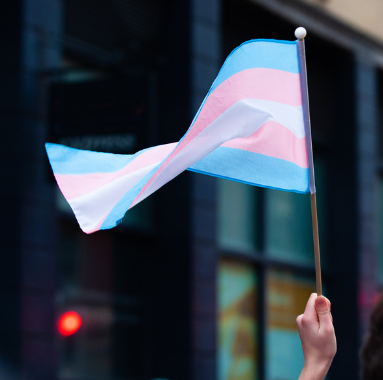
Sustainable Development Goal (SDG) 5 emphasises the significance of achieving gender equality by 2030. As we celebrate Pride month in June, it is a time for reflection on the history of the LGBTQIA+ community worldwide. This year, A4ID aims to shed light on the lack of recognition for trans people within SDG 5 and stress the importance of inclusive targets that embrace gender diversity. 

The UN’s SDG Agenda is driven by the principle of leaving no one behind. Therefore, the pursuit of gender equality must extend to those who do not identify with their assigned gender at birth and to those who do not conform to the binary understanding of gender (male/female). Excluding trans and gender diverse individuals from the SDGs directly contradicts the core values of the agenda and perpetuates the historical pattern of systemic exclusion and oppression faced by the LGBTQIA+ community. 

The Stonewall Uprising and the Significance of Pride 

In July 1969, the Stonewall Inn, a popular gay bar, was raided by police, resulting in the arrest of its patrons. In response, the LGBT+ community fought back, sparking a six-day period of collective action and protests demanding the right to live without fear or persecution. One year later, the community sought to commemorate the events of that night. Today, we celebrate Pride month, acknowledging the sacrifices made by the LGBT+ community in their struggle for fundamental human rights. 

During the Stonewall Uprising, male patrons dressed as women for the first time refused to undress when confronted by police officers. This defiance, which previously led to arrests for those in drag, marked a turning point. Unfortunately, even after many years, political institutions, law enforcement agencies, and judicial systems worldwide continue to unjustly discriminate against members of the LGBT+ community, particularly trans individuals. 

International Legal Frameworks

International Human Rights Law asserts that every individual deserves ‘protection against violence and discrimination based on sexual orientation and gender identity’. Furthermore, the right to have one’s gender identity recognised is rooted in the ‘right to equal recognition before the law’, as established by Article 6 of the Universal Declaration of Human Rights. Despite these principles, trans individuals globally still struggle to obtain official documentation that aligns with their gender identity. In fact, as of 2015, only 11% of trans people in the US possessed identification that matched their gender identity. Lack of recognition by the state impacts an individual’s access to healthcare, housing, social security, freedom of movement, residence, and ‘perpetuates discrimination, violence, and exclusion in various social settings, including education and work environments’. 

In some instances, trans people are subjected to forced psychiatric evaluations, unwanted surgeries, or sterilisation, practices enforced by countries such as Japan, several US states, and 18 European countries. These practices not only defy the Yogyakarta Principles, defined by human rights groups on sexual orientation and gender identity, but are also described as state-sanctioned torture. Despite calls from the UN to legally recognise trans individuals’ preferred gender without requiring abusive procedures, many countries still fall short. In fact, we are witnessing a backpedalling on progressive gender policies due to damaging public narratives. 

The Sustainable Development Agenda and the Need for Inclusion 

While there has been increased public discourse on trans rights in recent years, trans individuals have been fighting for recognition long before the drafting of the SDGs in 2014 and 2015. However, the sustainable development agenda remains silent on addressing the specific structural inequalities faced by gender diverse people. Unlike the more limited definition of development set out in the Millennium Development Goals (MDGs), the SDGs aim to focus on the development of people, planet, prosperity, peace, and partnerships. This inclusivity should encompass all people, regardless of sexual orientation, gender identity, or expression. 

However, many countries that are signatories to the SDGs still uphold draconian laws that legitimise the exclusion and persecution of LGBT+ individuals. For instance, Uganda has enacted a law allowing the death penalty or life imprisonment for engaging in or promoting ‘same-sex acts’. Critics argue that by solely focusing on equal rights for women, the UN overlooks the specific barriers faced by gender diverse individuals, thereby preventing them from realising their human rights. 

Systemic Discrimination of Trans People and the Path Forward 

Opposition to recognising gender diversity is often framed as protecting national identity, traditions, or women’s empowerment. Those who oppose recognising trans people’s gender identity argue that such diversity jeopardises women’s concerns and the integrity of gender-segregated spaces. While these concerns rely heavily on anecdotal evidence, they have spurred a political response resulting in legal measures that limit the social integration of trans individuals. 

In the UK, transgender people face discrimination in both policy and public discourse. The severity of the problem was highlighted when a British transgender woman was granted asylum in New Zealand in 2017 based on her gender identity. The landmark case recognised the ‘unduly harsh’ treatment she would face if forced to return to the UK after enduring years of persecution. Unfortunately, this resolution is not available to everyone, and as a result of what has been described as an ‘epidemic of violence against trans people’, nearly half (48%) of trans individuals under 26 in the UK have attempted suicide. 

Concerning trends also emerge regarding the detention and imprisonment of trans individuals globally. In the UK, 90% of trans women in prison are housed in men’s prisons. In February this year, the UK government passed a law to ensure that no transgender women with ‘biologically male genitalia’ will be held in women’s prisons. The rationale for this decision has been based upon few instances of transgender women abusing other prisoners, however this is not a basis for such generalised discrimination. This law encourages invasive validation of an individual’s gender, reminiscent of the struggles faced during the Stonewall era. Furthermore, it invalidates an individual’s right to self-determination, which directly contradicts the principles of freedom and autonomy. 

Reports from US prisons reveal that transgender prisoners are more likely to face solitary confinement, torture, ill-treatment, and sexual abuse, particularly in immigration facilities. Moreover, laws criminalising sex work disproportionately affect trans people, exacerbating police abuse and involving them in the criminal justice system. 

In a clear violation of the Mandela Rules, a trans prisoner in Egypt was held in underground detention without natural light or outdoor activity for eight months. Additionally, despite being medically qualified for gender-affirming treatment, the individual was denied hormone therapy and subjected to a full physical examination without a prosecutorial order. 

Policy and Legal Recommendations 

Without adequate legal advocacy, trans people will continue to endure brutal conditions. More countries should follow the lead of Australia, Bangladesh, Canada, India, Nepal, New Zealand, and Pakistan by officially recognising genders other than male and female. Advocacy for legislative changes that reflect gender diversity lays the foundation for more inclusive legal and administrative systems that cater to the entire population. 

Furthermore, around the world lawyers must advocate for: easier access to official documentation based upon self-determination of gender; the ending of invasive practices; the protection of the right to self-determination; and improved access to fundamental rights and necessities for trans people. Enacting hate crime laws that establish transphobia as an aggravating factor, would also help curtail anti gender diversity narratives and reduce the amount of hate experienced by trans people on a daily basis.

Lastly, A4ID calls on the UN to promote the safety of trans individuals by recognising their rights in the SDG 5 Gender Equality targets. Currently, none of the targets or indicators explicitly address the inequalities faced by gender diverse or trans people. Organisations like the Swedish NGO RFSL have outlined detailed recommendations on how LGBTQIA+ people can be included in the existing SDGs, including SDG 5, to ensure their human rights are fulfilled. Many experts have also provided detailed recommendations on how the international community can effectively include this community in the sustainable development agenda. It is essential to incorporate targets that address the struggles faced by the trans community and work towards ending their persecution in order to achieve gender equality by 2030. 

Module 6: Achieving the SDGs through Pro Bono

Live session: Saturday 18th November 2023, 10.00 – 16.30 (BST)

This session will explore practical ways legal specialists can use their expertise to contribute to the development agenda and in the realisation of the SDGs. This session will be delivered by A4ID Pro Bono and ROLE UK programme teams, with support of our legal and developmental partners.

Module 5: Equality before the Law

Live session: Saturday 14th October 2023, 10.00 – 16.15 (BST)

This module will examine reducing inequalities, with a particular focus on gender equality. We will consider reducing inequalities overall under SDG 10, including ways lawyers can help clients achieve equal outcomes. Further, you will learn more about SDG 5 and how international organisations like the World Bank promote legal reform to support the achievement of SDG 5 in practice. 

Module 4: Eradicating Poverty Using the Law

Live session: Saturday 16th September 2023, 10.00-16.15 (BST)

During this session, participants will build a greater awareness of how the law, and the work of lawyers, can support the SDG Agenda and, in particular, SDG 1. Experts from across the sector will join to share their experiences in working towards the achievement of No Poverty, which intersects strongly with all of the SDGs. 

Module 3: Strengthening & Developing the Rule of Law

Live session: 15th July 2023, 10.00 – 16.15 (BST)

This session will examine the place of the rule of law in addressing persistent societal problems such as death penalty, corruption, debt incarceration, global poverty and inequality within the framework of the Sustainable Development Goals.

Instructor: Michael Woolcock 

Michael Woolcock is Lead Social Scientist in the World Bank’s Development Research Group, where he has worked since 1998. For seventeen of these years, he has also been an Adjunct Lecturer in Public Policy at Harvard University’s Kennedy School of Government. His current research focuses on strategies for enhancing state capability for implementation, on transformations in local social institutions during the development process, and on using mixed methods to assess the effectiveness of “complex” interventions. In addition to more than a hundred journal articles and book chapters, he is the author or co-editor of fourteen books. Most recently, he has co-edited three scholarly volumes on case studies, popular culture, and the future of multilateralism, and written a book for a broader audience (International Development: Navigating Humanity’s Greatest Challenge; Polity Press, 2023). An Australian national, he has a PhD in comparative-historical sociology from Brown University. He has been presenting seminars at A4ID since its founding in 2008.

Instructor: Betsy Andersen 

Elizabeth “Betsy” Andersen is Executive Director of the World Justice Project, leading its global efforts to advance the rule of law through data collection, analysis, and research; advocacy and strategic convenings; and support for a global network of stakeholders.  Ms. Andersen has more than 25 years of experience in the international legal arena, having served previously as Director of the American Bar Association Rule of Law Initiative (ABA ROLI) and its Europe and Eurasia Division (previously known as the Central European and Eurasian Law Initiative or ABA CEELI), as Executive Director of the American Society of International Law, and as Executive Director of Human Rights Watch’s Europe and Central Asia Division.  

Ms. Andersen is an expert in international human rights law, international criminal law, and transitional justice, and she has taught these subjects as an adjunct professor at the American University Washington College of Law. She is a member of the American Law Institute and the Council on Foreign Relations and serves as a member of the Board of Trustees of Williams College as well as on the governing and advisory boards of several international non-profit organizations. She is the recipient of a number of awards for her work in the international rule of law field, including a Williams College Bicentennial Medal, the American Society of International Law Prominent Woman in International Law Award, and the ABA Section of International Law World Order Under Law Award.

Ms. Andersen began her legal career in clerkships with Judge Kimba M. Wood of the U.S. District Court for the Southern District of New York and with Judge Georges Abi-Saab of the International Criminal Tribunal for the former Yugoslavia. Ms. Andersen received a B.A. from Williams College, an M.P.A. from Princeton University’s School of Public and International Affairs, and a J.D. from Yale Law School. 

Module 2: Climate Justice, Biodiversity & the Law

Live session: Saturday 24th June 2023, 10.00 – 16.15 (BST)

This session will explore the role that lawyers can play in enabling negotiations, and in particular assist countries that are most vulnerable to climate change seek justice. We will look at developments in Climate Change law, consider how the international treatise may be implemented, and discuss how the demands of developed and developing countries in relation to climate action differs.

Speaker: Pascale Bird

Pascale Bird is the acting executive director of Legal Response International (LRI), a London based charity that provides free legal assistance to poor and climate vulnerable developing countries and NGOs at the UN climate negotiations. She has over ten years’ experience working in the climate arena. She is a qualified solicitor and holds an LLM in International Business Law and an MA in Geopolitics, Territory and Security. Before joining LRI, she worked as an Associate and Professional Support Lawyer in the EU and Competition department of Simmons & Simmons. She also volunteered for Oxfam, project managing a book on climate change liability.

Speaker: Olivia Tattarletti

Olivia Tattarletti is a legal officer at LRI. She has been involved in the international climate change negotiations for over 7 years. She is a qualified solicitor and holds a Masters in Business Administration. Before joining LRI, she worked at Birnberg Peirce representing bereaved and survivors at the Grenfell Tower Inquiry. Prior to that, she trained and then worked as an Associate in the Dispute Resolution department at Simmons & Simmons. She also took the A4ID Law and International Development training programme in 2015-2016.


Rule of Law

Programmes and Partnerships

Rule of Law Expertise (ROLE UK) Programme

The ROLE UK Programme works towards strengthening the rule of law and improving access to justice in FCDO-priority countries by supporting partnerships to provide high-quality pro bono legal and judicial expertise.

Learn more here

KAZA Legal Expert Network Project

The KAZA Legal Expert Network Project aims to build a network of legal experts across the Kavango-Zambesi (KAZA) region in Southern Africa, encompassing prosecutors and magistrates to better tackle the battle against the Illegal Wildlife Trade. The network wants to share and promote best practices for legal experts in KAZA, including capacity building for the network members. 

Toolbox: Monitoring & Evaluation Methods for Trainings

A4ID’s ROLE UK Programme has produced this toolbox to support those delivering trainings on rule of law issues as part of their international pro bono practice. This resource complements the tools in two earlier papers: ‘Maximising Technical Assistance to Improve the Rule of Law’ and the ‘Monitoring & Evaluation Toolbox’. It integrates the project planning frameworks and methods conveyed within the aforementioned guides and builds upon these. The specificity of this toolbox is that it focuses on M&E for training activities.

The toolbox is targeted at legal and judicial specialists undertaking, or seeking to undertake, international legal technical assistance. It will be of most relevance to professionals in the legal sector, and especially useful to those who are trying to address specific rule of law issues through targeted interventions, including trainings, and wish to understand and increase the impact of this work.

Legal Pro Bono in the Achievement of SDG 16

Since the adoption of the Sustainable Development Goals (SDGs) in 2015, A4ID has fully embraced this agenda. A4ID’s ROLE UK Programme, with its focus on strengthening the rule of law, directly contributes to SDG 16 on Peace, Justice and Strong Institutions.

There is a robust tradition in the UK of legal and judicial professionals providing pro bono services. As part of its mission to generate and share knowledge and best practice, A4ID wants to enhance its understanding of how these pro bono efforts contribute to the achievement of SDG 16.

Through quantitative analysis of data and case studies, drawn from work supported by A4ID as well as other organisations, this paper seeks to:

It is our hope that this paper offers pro bono providers, and those who support them, innovative ideas and practical guidance as to how best to link their efforts with the SDG agenda.

Strengthening government lawyers’ capacity to negotiate and manage contracts

The Rwandan government faced a significant loss of public money due to delays stemming from poor quality government contracts. This, together with ineffective contract management, had long hindered government-investor relationships, negatively impacting economic growth in Rwanda.

In order to tackle this problem, the Rwandan Ministry of Justice (MINIJUST) rolled out a program of reform, and in August 2015, ROLE UK was asked to deploy three UK lawyers to provide capacity building support for the ministry on a pro bono basis. This was to include face to face advice and training sessions for legal officers to better negotiate and manage commercial contracts, jointly delivered with legal advisers from MINIJUST.

ROLE supports assignments that can demonstrate longer term sustainability and where a need for UK expertise is clear. In this instance, the DFID funded Legal Assistance for Economic Reform (LASER) programme had been working with MINIJUST since 2014 to help them improve capacity on contract management including developing model contracts.  The technical assistance requested was part of and intended to build on this work; and LASER’s ongoing programme could provide proactive follow up, which was likely to support longer-term, more sustainable outcomes.

Moreover, the Rwandan government is keen to benefit from high level technical support from the UK international pro bono sector – the genocide in Rwanda severely dented technical capacity in legal and judicial institutions and the government is committed to developing a hybrid civil-common law system.  ROLE was therefore ideally placed to support this work.

LASER identified a team of 3 lawyers, two of whom were from the Government Legal Department (GLD) and the third, a commercial lawyer in private practice to deliver the training. ROLE found that all 3 specialists had previously contributed to the contract management reform process in Rwanda through their involvement in the development of model contracts and therefore understood the background to the work well.  

The lawyers shared their knowledge and experience of drafting, negotiating and implementing contracts from one practitioner to another.  Feedback from MINIJUST showed that this genuine peer-to-peer support for government lawyers was particularly valued.

The UK team also appreciated the opportunity to work with MINIJUST and felt that what they learned from the experience would strengthen their work in the UK. This was their first experience of this kind of work and they were keen for more opportunities.

I gained a much better and more nuanced understanding of the risk transfers in a traditional works contract as opposed to Design and Build.  I gained a perspective on different approaches to legal advice that involves working across several departments. I enjoyed sharing the UK government lawyer experience and gained insight to the problems faced in complex infrastructure projects.  I will apply this knowledge in my work on major government projects.

-Lillian Arinze, GLD 

Empowering prisoners to represent themselves

Around 40% of the prison population in Kenya are held on remand without access to a fair trial.  They can remain in prison for years – a decade is not uncommon. According to a UNODC report, prisoners who are poor, have low levels of literacy and low levels of education are forced to navigate the judicial system alone where they encounter a complex labyrinth of laws, traditions, copious paperwork and restrictive time limits.

Compounded by the fact that legal aid at state expense is limited to those charged with capital offences, the poor are disproportionately more likely to remain in custody beyond constitutional limits

While Kenya has made good progress towards realising the rule of law, enhancing opportunities for men and women to receive representation and a fair hearing has the potential to resonate more widely on the political spectrum and increase momentum towards fairer and more just practises, thus strengthening the rule of law.

The African Prisons Project (APP), is an organisation that works to reform the criminal justice system to rehabilitate and empower prisoners, in order to reduce the number of prisoners on remand.  APP applied to ROLE UK seeking legal support to produce manuals for bail and appeals procedures, that also looked at alternative dispute resolution methods.   The manuals are intended to allow inmates to better represent themselves and each other, leading to fewer detainees.  They will also help prevent the initial incarceration of people accused of petty crimes and help divert people from a custodial sentence where it becomes more difficult to be heard.

The project aims to improve access to justice for prisoners, one of the most poor and marginalised groups, and thereby falls directly under ROLE UK’s work on improving equality and social justice.

ROLE UK supports Rule of Law assignments that are strategic in their design.  In this instance, ROLE found evidence that Coulson Harvey, a Kenyan law firm, The Law Society of Kenya, the Kenya School of Law and the Attorney General’s National Legal Aid and Awareness Programme (NALEAP) had all pledged various levels of support and involvement to the project and to wider reforms, demonstrating a larger political will and sound momentum for change. 

In addition, APP had already secured funding for the project from the Clifford Chance Foundation, along with commitments from other UK law firms to mentor students and establish legal aid clinics.  ROLE supports such collaborative approaches as they help ensure that projects are sustainable in the long run.

ROLE enabled three UK legal specialists, Tom Dunn, Director of Pro Bono at Clifford Chance, Lucy Stoy and Andrew Murn, experienced international litigators to gauge the scale and extent of the work going on, visit the sites, engage directly with the staff and prison inmates first-hand, advise on the scope of the project and help develop the legal manuals.

Our specialists found this direct, peer-to-peer approach extremely valuable, stating that it allowed them to reflect on the capacity of those who would eventually use the manuals with much greater accuracy, thereby enabling them to develop the most tailored resources. 

Feedback from Kenyan stakeholders illustrated that the visit was crucial in enabling justice system stakeholders to meet and deliberate on the best possible way forward. The fact that the UK experts visited the project sites, were familiar with domestic laws, met and engaged with the beneficiaries and crystallised working relationships with local partners was seen as genuinely facilitating progress by the Kenyans. 

“It is very good to see the UK team went through the materials sent beforehand. This greatly helped both UK and Kenya teams move ahead on the assignment from a point of understanding of Kenya Statute Law, policies and case law.”

-African Prison’s Project

Improving accountability among public officials

Complaints about maladministration in the public sector have become increasingly common in Kenya. Public officials are responsible for a variety of decisions that include whether someone is entitled to an ID card or to vote, whether their child is admitted to secondary school, or whether they get a business licence. Decisions are also made about whether a person may build in a certain place and what building standards must be respected. Equally, they could be about allocating land, extending leases or closing businesses. Mistakes or misconduct in such decision-making, disproportionately affect people who are too poor to challenge administrative decisions in court.  This poses a problem of access to justice.

An improvement in adherence to administrative law principles represents a real and practical gain for the Rule of Law. The Katiba Institute, a Kenyan organisation working to ensure implementation of Kenya’s 2010 Constitution believes that increasing Kenyan officials’ awareness of their constitutional duties will enable them to make decisions that are lawful, reasonable and procedurally fair.   In conjunction with other capacity building initiatives, a partial solution may therefore lie in developing adequate training resources.

ROLE UK supports Rule of Law projects that are rooted in the needs and priorities of end-users, that solve specific problems and are strategic. In this instance, the Katiba institute wanted external experts to help develop administrative law training resources including a Kenyan version of the UK’s Judge Over Your Shoulder (JOYS) manual; a publicly available guide to administrative law aimed at civil servants without a background in law.  As Bingham Centre research has shown, the use of the JOYS manual as a model by other countries has contributed to improved decision making and there has been strong support for the initiative amongst key Kenyan actors, such as the Ombudsman.  The initiative also aligns with other projects intended to strengthen the responsiveness and accountability of government in Kenya.

This assignment is part of a larger programme, part-funded by the FCO Magna Carta Partnership, supporting the work of the Bingham Centre for the Rule of Law in London, and by a Swedish foundation supporting the work of the Katiba Institute in Nairobi.

Working with the Bingham Centre for the Rule of Law, ROLE secured the involvement of two specialists to contribute to a high-level consultation convened by Katiba Institute. Steven Bramley has many years’ experience providing legal advice within the civil service and conducting legal awareness training.  He has also been at the forefront of legal awareness programme redesign in recent years and is the Legal Director at the UK Department of Communities and Local Government.  Cora Hoexter is a South African academic and a leading expert on administrative law in the jurisdiction. She has contributed to the reform of South African administrative law via the South African Law Reform Commission and to recent Kenyan administrative law reforms. 

Our specialists provided their knowledge, time and skills pro bono at the consultation which brought together Kenyan public bodies and foreign experts to discuss how a civil service guide could be devised to help implement the right to “fair administrative action” in the 2010 Constitution of Kenya.

Feedback indicates that the Bingham Centre and ROLE specialists shared their knowledge in a way that was relevant to the Kenyan audience. They judiciously pointed out the weaknesses and strengths of the UK model, highlighted points of similarity and made suggestions on how efforts to promote administrative justice in Kenya could benefit from lessons learned in their respective jurisdictions.  They provided advice on a peer to peer basis and did not advocate any particular solution. This approach empowered the Kenyans to make their own decisions about what solution fit them best.

The Kenyan School of Government and the Public Service Commission, which together are responsible for recruiting and training a large proportion of civil servants, have since said that will use Katiba’s “Kenyan JOYS” to train public officials and improve administrative decisions.

Our project was enhanced by ROLE UK who enabled us to invite senior UK and overseas experts with decades of experience in administrative justice.  Both experts more than lived u​p to the strong credentials on the basis of which they had been invited. – The Bingham Centre for the Rule of Law