Climate change is the single biggest threat to sustainable development. As this issue becomes more urgent, the role of the international legal community becomes even more important in advancing SDG 13: Climate Action. Law can be a tool for positive change and lawyers have a role to play in tackling climate change. There are legal risks and opportunities arising from the impact of climate change. These impact business operations and society in general. Innovative and leading law firms can lead the transition to a low-carbon economy by helping their clients to identify these. This Guide provides practical advice and actions for lawyers in the fight against climate change.
It is our intention to keep the Chapters as up to date as possible. Please help us to do so by providing feedback or new information which to include in them. Contact us at sdg.legal.initiative@a4id.org
Climate change undermines the ability of all countries to achieve sustainable development.
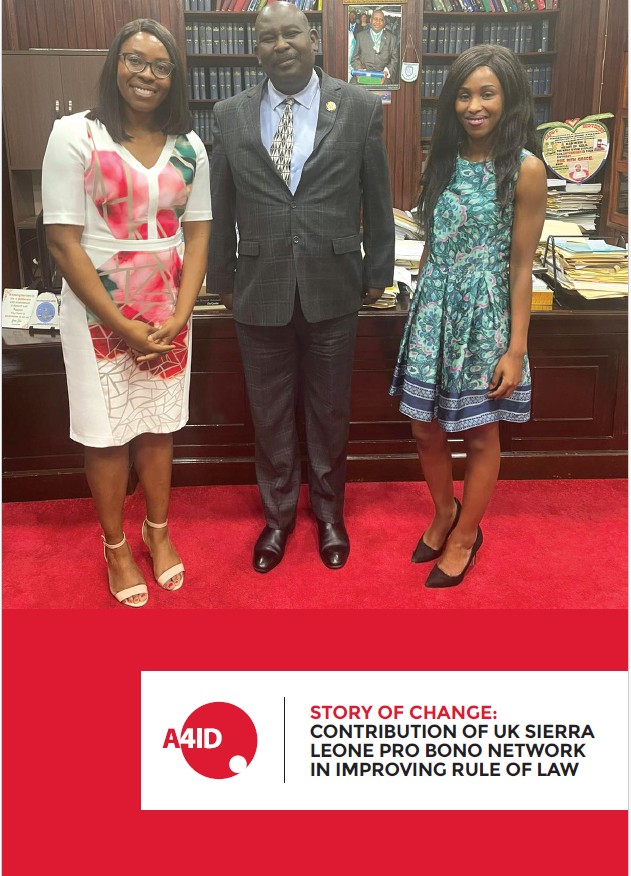
Story of Change: Contribution of UK Sierra Leone Pro Bono Network in Improving Rule of Law
This Story of Change highlights how the work of the UK Sierra Leone Pro Bono Network (UKSLPBN) has contributed to strengthening the capacity, opportunity, and motivation of legal institutions in Sierra Leone to improve laws, policies, systems, and practices.
CEO Insight: SDG 8: Decent Work and Economic Growth
International Labour Day in a Time of Collective Action
The UN Sustainable Development Agenda sets out decent work for all as a 2030 target, stressing job creation as key to eradicating forced labour, slavery, and human trafficking. This target underscores the importance of employment as a driver of social change and sustainable development. However, with a global unemployment rate of 5.8% and 53.1% of the population not covered by social protections, there is still a long way to go before meeting the 2030 deadline.
Labour Day 2023
1st May marked International Labour Day (sometimes referred to as May Day or Workers’ Day), a day to celebrate the working classes and recognise the industriousness that keeps the world spinning. In many countries such as Libya, Kenya, Mauritius, Morocco, Namibia, and Nigeria, Labour Day is recognised as a public holiday, many more celebrate by closing workplaces and holding parades. Historically, this day has signified an opportunity to campaign for decent work and fundamental rights and protections.
The collective action of workers on Labour Day has forced governments to establish extensive labour laws outlining working conditions and minimum expectations for the consultation of workers. Looking towards Europe as an example, EU policy provides a framework of rights and obligations in the workplace, protecting the health and wellbeing of employees by enforcing regulations such as the working hours directive and minimum annual leave requirements. In setting such labour standards, EU policy safeguards economic growth and promotes social cohesion. The existence of the single market further drives the need for such protections, blocking the potential for a race to the bottom in labour standards across Europe. EU Labour Law sets minimum standards for over 240 million workers, however individual member states can set further regulations or offer extended benefits.
Legal action taken by unions has led to some countries banning certain gig economy employers. A landmark case in UK Labour Law, Uber v Aslam, held that Uber must recognise drivers as employees entitled to minimum wage and holiday pay. This is just one example of how stringent labour laws can protect employees, alongside legal support offered by Unions.
In the UK alone, inflation reached 9.2% in 2022, the highest ever recorded, while domestic gas prices increased by 129%. Despite unprecedented inflation, many saw their salaries remain the same, effectively awarding them a real-wage pay-cut. In response, the UK has seen consistent strikes from May 2022 to the present day. The strikes, sparked by the National Union of Rail, Maritime and Transport Workers (RMT) transformed into a national campaign – Enough is Enough! – wherein workers demanded real pay rises, reduced energy bills, an end to food poverty, decent housing for everyone, and increased taxes for the richest in society.
Strikers were joined by transport unions, postal workers, junior doctors, ambulance workers, telecommunications staff, university lecturers, refuse workers, and other industries. Particularly relevant to the legal community were the barrister strikes, which started in September 2022. According to the Criminal Bar Association (CBA), the real wage of barristers fell 28% over two decades, with salaries averaging £12,200 for the first 3 years in the profession. Since 2017, 25% of qualified barristers have left the industry, with a further 25% planning to quit. The consequences of these conditions mean a massive backlog of cases are yet to go to court. Following the strikes, barristers across the country voted to accept a 15% increase in criminal legal aid fees, proving the effectiveness of direct action in bargaining for improved working conditions.
Policy recommendations
In response to worsening living conditions, some countries have implemented policy changes in order to improve worker wellbeing and avoid burnout. South Africa, Belgium, Iceland, and Japan implemented 4-day work week policies resulting in ‘improved productivity’, ‘better team culture’, and less burnout. Trials of the 4-day work week were based on employees receiving 100% of their pay, for working 80% of the time, and delivering 100% of their usual output. A mass trial of the 4-day week policy in Australasia observed a 44% average reduction in absenteeism and a 9% reduction in resignations. The implications of this show that improved employee wellbeing leads to more productivity and a generally stronger workforce; supporting this policy recommendation at a national level could help rejuvenate workforces.
How can the legal community support workers’ rights?
In times of crisis, the legal system should be a champion for those who are persecuted. As the world adapts to life beyond COVID-19 and responds to the persistent threat of global warming, employers evolve to utilise new working practices. But as workplaces change so must legal frameworks. As the prevalence of transnational companies increases, transparency laws must ensure supply chains are clean, stamping down on child labour and preventing a global race to the bottom in labour standards. Furthermore, trade unions must be supported by the rule of law in attaining inflation consistent pay rises and upholding anti-harassment and discrimination laws.
Lawyers and legal experts are key in shaping and upholding legislation that supports job creation and ensures the safety and rights of workers. While employment lawyers must continue to defend labour laws, commercial lawyers must work with business clients to create safe and equitable workplaces. Law firms can work together to make their pro bono work more strategic, aligning with the SDG agenda ensures law firms are working towards joint goals, while the SDG 8 targets outline what must be done to provide decent work for all.
A4ID’s Legal Guide to SDG 8: Decent Work and Economic Growth is now available to read, an in-depth manual for lawyers looking to support workers’ rights and pursue the achievement of the SDG agenda by 2030.
Workplaces have the power to give us a sense of purpose, productivity and worth, but they are also institutions of inherent power imbalance. SDG 8 focuses on the role of workplaces and the wider economy to create greater growth and prosperity, harnessing the potential of our people for a sustainable future built by, and for, everyone. By providing access to economic opportunities, workplace protections, and fair pay, countries can promote greater social mobility, combat poverty, and improve the working and living conditions for the most vulnerable in their society.
It is our intention to keep the Chapters as up to date as possible. Please help us to do so by providing feedback or new information which to include in them. Contact us at sdglegalinitiative@a4id.org
The law acts as a protector in times of crisis and it is through it that we can hope to achieve prosperity post-pandemic and beyond. The role of lawyers in establishing the ‘new-normal’ for workplaces across the globe, in combating exploitation in all its forms and securing economic growth will be at the heart of these changes.
SDG 17: Legal Guide to the SDGs
The SDG Agenda is a global agenda. It does not belong to a single State, party or person, but is a universally agreed set of priorities, goals and indicators that will require coordinated efforts to succeed. To do so, SDG 17 acts as a bedrock upon which this principle rests; that no global objective can be achieved without the combined action of international and regional organisations, national governments, civil society, NGOs and the private sector. To make this shared vision a reality, SDG 17 calls upon all stakeholders, including the legal profession, to draw on their expertise and position to make progress towards the other SDGs.
It is our intention to keep the Chapters as up to date as possible. Please help us to do so by providing feedback or new information which to include in them. Contact us at sdg.legal.initiative@a4id.org
Strengthening access to justice notably involves raising awareness about legal rights as well as legal aid services to overcome financial obstacles to access to justice.
SDG 16: Legal Guide to the SDGs
SDG 16 is both an objective and a catalyst for all the SDGs. Without peace, justice, and inclusion, achieving goals such as ending poverty, ensuring education, or promoting economic growth is difficult or impossible to sustain. Supporting and promoting SDG 16 brings the promise of many desirable consequences. Peaceful and just societies, based on the rule of law, are likely to have effective, accountable, and inclusive institutions, that protect human rights and drive the type of development that is truly sustainable.
It is our intention to keep the Chapters as up to date as possible. Please help us to do so by providing feedback or new information which to include in them. Contact us at sdg.legal.initiative@a4id.org
Strengthening access to justice notably involves raising awareness about legal rights as well as legal aid services to overcome financial obstacles to access to justice.
SDG 6: Legal Guide to the SDGs
Access to water and sanitation are recognised by the United Nations as human rights, reflecting the fundamental nature of these basics in every person’s life. Lack of access to safe, sufficient and affordable water, sanitation and hygiene facilities has a devastating effect on the health, dignity and prosperity of billions of people, and has significant consequences for the realization of other human rights. This Guide gives an overview of the legal instruments relevant to the topics of access to water and sanitation, as well as highlighting the legislation and policies adopted by regional organisations and national governments, and relevant cases and proceedings related to access to water and sanitation.
It is our intention to keep the Chapters as up to date as possible. Please help us to do so by providing feedback or new information which to include in them. Contact us at sdg.legal.initiative@a4id.org
Lack of access to safe, sufficient, and affordable clean water, sanitation, and hygiene facilities has a devastating effect on the health, dignity, and prosperity of billions of people the world over..
SDG 5: Legal Guide to the SDGs
Securing gender equality rights in every aspect of life is essential to achieving a just and sustainable world. Gender inequality arises from established and often institutionalised cultural beliefs and behaviours that play out at personal, societal, institutional, and political levels. Strong legal frameworks establish the equality standards that institutions and society at large must uphold and provide a firm basis for policies aiming at improving the circumstances of women and girls. This Guide provides practical advice and actions for the global legal community in working towards the achievement of gender equality universally.
It is our intention to keep the Chapters as up to date as possible. Please help us to do so by providing feedback or new information which to include in them. Contact us at sdg.legal.initiative@a4id.org
The discrimination and the disparities in how people of different genders are treated, and the opportunities they are afforded, cut across all the Sustainable Development Goals.
SDG 4: Legal Guide to the SDGs
Quality education is fundamental to sustainable development. Education is the one of the most powerful tools by which people can lift themselves out of poverty and fully participate in their communities. SDG 4 sets specific targets to address the challenges of achieving quality education universally, and provides a comprehensive framework to reaching inclusive and equitable quality education for all. Beyond enrolment rates, SDG 4 puts a welcomed emphasis on quality education and learning outcomes. This Guide takes a deep dive into how the law can play a large role in achieving SDG 4.
It is our intention to keep the Chapters as up to date as possible. Please help us to do so by providing feedback or new information which to include in them. Contact us at sdg.legal.initiative@a4id.org
Education is the one of the most powerful tools by which people can lift themselves out of poverty and fully participate in their communities.
CEO Insight: SDG 5- Closing the Gender Pay Gap
The legal community can play a crucial role in eradicating the pervasive gender pay gap, a nuanced issue that affects all women.
Credit: Kelley Lynch/WorldBank
8 March saw the annual acknowledgement of International Women’s Day. A day where the global community celebrates women’s socio-economic and cultural achievements and recognises the ongoing struggle for equality that is still being fought by women around the world. This year’s theme ‘Embrace Equity’ identifies that indicators of gender equality, like access to education, health, politics, and the judicial system, vary for each woman, according to their circumstance. The global community must embrace inclusivity and bridge the gaps that make it so much harder for women of colour, working class women, women with disabilities, trans women, and all those experiencing marginalisation to succeed in an already unequal world.
Sustainable Development Goal 5 calls for universal Gender Equality by 2030. The Goal focuses on ending discrimination, exploitation, and violence against women, and ensuring women are offered opportunities and encouragement equal to men. The Goal also acknowledges the gender pay gap, with Target 5.5 focusing on the role of women in managerial and political positions as an indicator of women’s participation.
This month, I would like to explore the pervasive gender pay gap and the part each of us can play in reducing it. The gender pay gap is a nuanced issue that affects women in different ways due to the misunderstood nature of the ‘unexplained’ or ‘hidden’ gap. I hope that in bringing some light to the ways in which women are unfairly treated, the legal community will readily engage in the pursuit to eradicate the gender pay gap, as outlined in #SDG5 and #SDG8.
The Visible Gender Pay Gap
SDG 8.5 demands ‘equal pay for work of equal value’ by 2030. This aspect of the gender pay gap, where women are underpaid despite their labour market value being equal to that of men, is easy to observe through available data.
The European Commission, in its 2021 report, identified a gender pay gap of 12.7%, despite pay discrimination being enshrined in the European Treatise since 1957. Women would need to work 1.5 months extra a year in order to make up for this difference. Despite this, education statistics remain in women’s favour – 81% of young women reach secondary education compared to 75% of men, and women represent 60% of university graduates. However, post education, women make up only 8% of top companies’ CEOs.
A portion of the pay gap can be understood through the overrepresentation of women in low-paying sectors. Generally, classically feminised careers tend to be undervalued. For instance, women make up 80% of health and social work employees, an industry paid significantly less than other male dominated sectors, despite accounting for approximately 3.4% of global employment.
While women are slowly diversifying to less feminised careers, the pay gap remains; the legal sector, a highly male dominated industry, still sports a pay gap of 25.4% in the UK. Furthermore, the transition to different sectors isn’t fast enough to match global trends. The UN predict that by 2050, 75% of jobs will be related to STEM (Science, Technology, Engineering, and Mathematics), while today, women hold just 22% of these positions. To understand why women still make up such a large part of low-paid industries, we must look at the driving forces behind these statistics.
The ‘Unexplained Pay Gap’
The ‘unexplained pay gap’ refers to imperceptible phenomena that affect the pay gap and are not easily understood through data. While women make up a large portion of university graduates and pay discrimination is illegal, women are still earning significantly less than men. To understand this difference, we must understand the cultural and societal expectations of women.
Globally, women are disproportionately assigned to be primary caregivers, spending on average 2.5 times as many hours on domestic work as men. This data varies significantly according to region – for example, in Pakistan this number is hugely inflated, with women undertaking 11 times the unpaid care and domestic work that men do. This generally means that women are taking significantly more career breaks in order to facilitate maternity and child care. Beyond this, women tend to hold part-time or flexible hours positions so they are able to prioritise child-care responsibilities.
The burden of unpaid family responsibilities falling to women forces them to take career breaks and obtain jobs that allow them to continue their child-care responsibilities alongside work. This phenomenon, referred to by Arlie Russel Hochschild as The Second Shift, is a cultural norm whereby women are expected to carry out hours of unpaid domestic labour, hindering their availability for paid work and career progression. In 2010 a Swedish study found that for every month of parental leave used by fathers, the mother’s wages increased by 7%, evidencing the benefits of shared familial burden. Additionally, the EU have found that differences in countries’ childcare provision policies correlate with the pay gap.
Furthermore, in STEM fields, where a growing number of women are graduating, even from the point of entry into their field women’s wages lag behind men’s of the same skillset, with the gap only widening over time. More research must be done into the challenges women face when trying to obtain jobs and advance in traditionally male dominated fields. For instance, when presented with a negotiable salary range, women are more likely to ask for the lower salary than men, perpetuating inequalities. If we again turn to Europe as an example, when accounting for career breaks and part-time work carried out by women, the lifetime gender-pay gap becomes 40%.
How Does this Affect Society?
The societal effects of women still being underpaid are numerous and the pay gap follows women into retirement. For example, women in United States retire with 30% smaller retirement pot than men. During their lives, women have generally poorer access to health care, welfare, and education, and are effected by the stress related effects of financial insecurity. During the Covid-19 pandemic, whilst women were generally at the forefront of the virus – dominating health care and public facing roles – fewer women were protected by government funded support such as income protection or furloughing schemes. This is because these schemes were not as readily available for domestic or part-time workers.
Furthermore, the unadjusted pay gap does not take into account bonus payments, seasonal payments, or commission. These are all things that are more difficult to attain when prioritising child-care responsibilities alongside work. It is clear that the gender pay gap needs to be considered in the greater context of gender inequality, rather than as a statistic. The societal benefits of addressing the gender pay gap are extreme, with the OECD predicting that by closing the gender pay gap, women’s earnings could increase by $2 trillion – money that would be circulated back into the economy.
Lower salaries and less stable incomes deter women from owning property or being active economic contributors. In some countries women are completely excluded from financial independence. For example, women in developing nations are 6% less likely than men to have a bank account. Also, there are still 72 countries globally where women are not allowed to open a bank account. Further, women-owned businesses in developing nations find it difficult to obtain credit or business loans due to their lack of financial collateral such as ownership of land or other financial resources. The World Economic Forum findings indicate that 80% of women-owned businesses have credit needs that are unserved or underserved. These global inequalities underscore the importance of equity in the pursuit of pay parity.
Solutions
The International Labour Organization found that economies increasing gender participation results in significant economic growth. The current underrepresentation of women in high paying roles excludes them from decision making, land ownership, and creates a cycle wherein women are prevented from reaching their potential. In order to meet the 2030 global agenda for Sustainable Development, gender parity in the workplace is essential.
The World Economic Forum has estimated it will take 151 years to close the gender pay gap if current trends are to continue. However, taking into account the ‘unexplained gap’, gender parity could be reached sooner if actions are taken now. In December 2022, the European Parliament agreed on a directive to make salaries more transparent, giving employees the right to access ‘sex-disaggregated’ data if the organisation employs over 100 people. Lawyers can play an essential role in ensuring transparency in organisations, helping to put this directive into practice across the EU and supporting female workers when they are proven to be underpaid.
Furthermore, in 2021 the European Commission produced a proposal for gender parity that included a work-life balance directive, ensuring companies made it easier for both parents to attend to family responsibilities; a European care strategy to support this; and a directive ensuring 40% of board-members should make up the company’s underrepresented sex.
Studies have shown than when an organisation has more female managers, the pay gap tends to be smaller. As reasoned above, women are often held back from progressing into managerial roles contributing to an underrepresentation of women in leadership; companies should make it a priority to support women into these positions, in order to perpetuate equal pay.
Governments must invest in childcare policies, allowing women to focus on their careers without the burden of unpaid care work. Likewise, companies should allow for men to take parental leave and offer flexibility of working for both genders, in order for families to share childcare responsibilities more easily.
As a business or organisation there are practical steps Law Firms can take:
Promote a gender inclusive business culture
Implement transparent pay structures and reviews
Base pay on the position itself rather than on the employee’s previous pay
Provide a more flexible working culture enabling women to access higher-level jobs
Share results with other organisations such as EPIC
Law Firms and General Counsel have a crucial role to play in enabling these solutions. When advising clients, they can ensure that their clients are adopting these policies that encourage equitable gender pay. By suggesting and drafting clauses within contracts, legal professionals can ensure that organisations are becoming gender equitable workplaces. There is also an opportunity to work with governments to draft legislation and policy that encourage organisations to adopt gender equitable business practices. Joining A4ID’s Pro Bono Brokerage gives legal professionals an opportunity to get involved in such valuable projects.
SDG 15 – Trapping the Illegal Wildlife Traffickers
The illegal wildlife trade is a multi-billion dollar business that threatens our biodiversity, endangered species and local livelihoods. At the heart of its combat strategy has to be the legal sector with a joint effort to strengthen weak criminal justice systems and connect the global law enforcement.
Mwangi Kirubi
The scenic drive from hectic Accra, Ghana’s bustling capital, along the coast leads through tropical, lush vegetation and is one of the nicest coastal routes in Western Africa. Dotted with palm trees, the beach road gives fantastic views onto sandy beaches and local fishing barges. Street vendors occasionally pop up along the road with their most random display: toilet paper, smart phone accessories and sachet water. Fried yam, grilled tilapia or meat are sold to feed the locals and the . A guidebook would praise this to be a picture perfect scene with some local colour thrown in. Except that it is not, nor here in Ghana, nor elsewhere in Africa. The grilled meat often turns out to be grasscutters, bushbuck and civet, universally known as bushmeat. Bushmeat is a vital source of protein across Africa and its consumption is rising among the growing population despite findings showing it to be a source of some zoonotic diseases and a threat to Africa’s wildlife.
Trading in illegal wildlife: Big business and low risk
A particular delicacy on the bushmeat platter across Asia and increasingly Africa is the endangered species of pangolins, although their meat is widely consumed for local subsistence too. Pangolins are the most trafficked mammal on earth with an estimated 1 million pangolins taken from the wild in the past ten years. The most valuable part of the pangolin is its scales, which are used in traditional medicines and for jewellery. Besides pangolin scales, other animal parts like elephant ivory, rhino horn, bear bile and tiger bone are highly sought after as medicinal products, which drives demand, especially in Vietnam and China. As a result, 500 African rhinos and 20,000 elephants are killed every year by poachers and their horns and tusks are being trafficked in the illegal wildlife trade from Africa to Asia.
Environment crime in its broader sense, includes wildlife and timber trafficking as well as illegal fishing. The 2019 World Bank Report has estimated its costs to be as high as US$ 1 trillion- US$ 2 trillion per year and it has emerged as the fourth most profitable illegal crime after drugs, arms and human trafficking. Criminals along the supply chain are attracted by the low-risk and high-value nature of the trade. The poachers in Africa and their immediate tradesmen only make 5-10% of the value, which can still be an attractive income but they are at risk of getting caught by rangers or while tracking dangerous wildlife in the bush.
Wildlife crime’s huge impact on biodiversity and local livelihoods
The consequences of the illegal wildlife trade on the planet are enormous. The ecosystem is permanently tipped out of balance and endangered species such as pangolins, black rhinos, amur leopards and forest elephants are threatened with extinction. Since 1970 the planet has already lost 68% of its biodiversity, according to the “The Living Planet Report 2020” (WWF). With a rapidly growing population and greater prosperity worldwide, we exploit our natural resources in an unsustainable way and put too much pressure on our planet’s wildlife. Wildlife trafficking leads to species loss, which can cause a cascade of effects on other dependant species and species from other regions might invade and possibly carry diseases. Habitat loss removes important buffer zones between humans and wildlife, causing human wildlife conflicts, but it is also more likely that animal pathogens come into contact with people, spreading diseases. The impact of illegal wildlife trade is reaching further than the environment itself, as it affects the economic development of some of the poorest countries by robbing communities of future revenues and poses a threat to the people who live and work alongside the wildlife. A sad example is the death of Anton Mzimba, a ranger who worked in the Timbavati Private Nature Reserve in South Africa. Last year he was brutally murdered in his home, in front of his family. It was his life’s passion to conserve nature and protect rhinos. Every day courageous wildlife rangers protect wildlife and risk their lives. More than half of all rangers across Africa do not have access to insurance if they are seriously injured or killed while on duty. It does not only put themselves at considerable risk, but also their families, who depend on the ranger’s income.
The local communities around national parks and game reserves mostly do not benefit from the tourism that the wildlife attracts as much as they should. Although rangers or wildlife guardians can be recruited locally, most members of those communities do not have access to higher education or better paid jobs. Poverty, and the opportunity to escape poverty, makes the offenders victims of their situation and circumstances. For the high-level criminal networks who orchestrate this crime, victims of poverty constitute a big recruitment pool of poachers.
Corruption and impunity are the key drivers
Illicit wildlife goods are sourced in jurisdictions with low risk of detection and punishment. Until recent years the main sourcing countries were situated in Southern and East Africa, but noticeably there has been a shift to West and Central Africa. Nigeria has evolved into a main transit hub for trafficking in illicit wildlife products from Eastern and Central Africa. From the Nigerian ports the illegal freight is shipped in containers to East and Southeast Asia. In 2021 alone, the Nigerian Customs seized nearly 17 tonnes of ivory and pangolin scales, from two separate large-scale seizures. That the illegal wildlife trade and in particular the transiting of those goods is flourishing in Nigeria is not a coincidence. Impunity and corruption are the key drivers of wildlife and forest crimes in the country, and this is the case in many African jurisdictions.
For more details, please see the complete background research available here.
The Legal sector’s task: Strengthening the criminal justice response
This trade is largely run by highly organised networks who make it difficult for law enforcement detection as they use sophisticated financial systems or transport logistics to facilitate wildlife crime. For nine years the private sectors have been involved in the fight against illegal wildlife trade through the implementation of the Financial and Transport Taskforce at united for wildlife (Royal Foundation), which includes global shipping, ports, airlines, banks and financial institutions. These taskforces use their resources and networks to prevent illegal wildlife trade products from being trafficked across borders and to detect and prevent money laundering, which is associated with the trade.
After incorporating the private sector, it is important to step up the efforts within the legal sector to take on the battle against traffickers. The current criminal justice response in wildlife cases across Africa is too weak: Earlier and stronger prosecutions, speedier trials and more proportionate and consistent sentencing need to be implemented. To fully implement these changes requires the political will of the countries where the products are sourced, to make it a priority. Arrest and seizure need to lead to an immediate and strong prosecution that will end up in a conviction, with an outcome that can be predicted.
Across the continent there is a huge variation in sentencing. In Nigeria a trafficker was sentenced to three months’ imprisonment for possession of 200 kg of pangolin scales. Last year a South African was sentenced to 5 years in prison, after being caught transporting two freshly extracted rhino horns in his home country, whereas a perpetrator in Uganda was given a life sentence for the possession of 10 kg of ivory. The example from Nigeria in particular is typical of the lenient sentencing and almost implies impunity. Wildlife cases like these are often dealt at a lower magistrates’ court, where they are not handled on a daily basis and not considered urgent or important enough to be dealt with swiftly. The specialised wildlife crime court in Uganda is an exception to this, the magistrates there manage the cases efficiently and are proficient in these particular crimes, also backed up by recently updated wildlife law. Many jurisdictions are in dire need of an update on their domestic laws, which would facilitate better prosecution and courts.
Connect the law enforcement: KAZA IWT Network project
When fighting transboundary serious organised crime, international collaboration of law enforcement agencies is absolutely key. Disconnected global law enforcement is a big enabler of the illegal wildlife trade in the jurisdictions where products are either sourced, trafficked or consumed. In theory, mutual legal assistance and extradition are difficult, in practice, it can be a lot more straightforward: Communication across borders and across departments or agencies is easiest done, when people know each other. When prosecutors just pick up the phone and ring each other to resolve issues. Secured, digital communication for exchange of information and provision of important documents such as Rapid Reference Guides in a digital tool for the prosecutors will improve the work across Africa for many.
Training of prosecutors, magistrates and judges is needed, particularly in more general aspects such as trial without delay, active case management, handling of evidence, preliminary hearings and prescriptive sentencing guidelines. Networks of legal and judicial professionals are necessary to gain trust and learn from each other.
To facilitate networking and training of legal and judicial professionals, A4ID’s ROLE UK Programme is implementing the KAZA IWT Network project in Southern Africa. The KAZA TFCA (Kavango-Zambezi Transfrontier Conservation Area) encompasses parts of Angola, Botswana, Namibia, Zambia and Zimbabwe. Through transboundary network groups, investigators, prosecutors and magistrates get to know their colleagues, exchange information on their work structure, and receive joint training to overall improve their collaboration in wildlife crime.
A4ID is committed to the Sustainable Development Goals. Our Conservation and Wildlife Theme focuses on SDGs 14 (Life below water), 15 (Life on land), 16 (Peace, Justice and strong institutions) and 17 (Partnerships for goals). Through our vast network of pro bono experts we can facilitate review of legislations, training of legal and judicial professionals and many additional services through partnerships in the field of rule of law.
To know more about A4ID’s KAZA IWT Network project and other work in the area of biodiversity and conservation, please get in touch with Jasmin Megert, Conservation and Wildlife Project Officer.
Role of Judicial Partnership in Supporting the Functioning of the Nigerian Courts during the COVID-19 Pandemic
The COVID-19 pandemic has posed a number of challenges to Nigerian courts. With the support of A4ID’s ROLE UK Programme, the Nigerian State Ministries of Justice and the Judiciary of England and Wales have worked together to not only overcome these challenges but to improve the courts’ functioning under adverse conditions.
Since March 2019, A4ID’s ROLE UK Programme has been supporting a partnership between the Judicial College of England and Wales and several Nigerian State Ministries of Justice, with assistance from Africa House London. The partnership aims to improve consistency in the training of magistrates in multiple Nigerian States with an emphasis on ethics and independence issues, equal treatment, case management, reasoned rulings, and handling vulnerable witnesses.
The Nigerian Vice-President had requested assistance through a UK MP. He identified a lack of training available for magistrates across multiple Nigerian states. Magistrates sit in Tier Four courts – State Courts – and preside over 90% of all Tier Four court cases. Therefore, offering them consistent and comprehensive training is paramount to upholding the rule of law within the country.
The ongoing collaboration between the Judicial College of England and Wales and the Nigerian State Ministries of Justice will ultimately contribute towards achieving UN Sustainable Development Goal 16 on peace, justice and strong institutions in Nigeria.
Face-to-Face Training in Nigeria before COVID-19
Judge Rachel Karp, Judge Barbara Barnes, and Judge Tim Devas initially delivered an in-person training in Niger State in August 2019. This training took place over the course of five days in partnership with the Niger State Ministry of Justice. It consisted of two 2-day courses, held back-to-back and followed by an additional day of training: ‘Introduction to Train the Trainers’. Seventy-seven of the eighty-two magistrates in Niger State participated in the programme. The ‘Introduction to Train the Trainers’ element was built in to ensure ongoing professional development of the Nigerian Judiciary and to decrease the need for external assistance from the UK over the course of the partnership.
Both partners hoped that this training in Niger State would be a pilot project, used to establish a feasible and sustainable programme that could be rolled out to neighbouring States across Nigeria. The Judicial College International Committee supported this initiative to explore the effectiveness and sustainability of training the lower-level judiciary in developing countries. Usually, senior judiciary receive training with the hope that this knowledge and expertise will cascade down to the lower levels of the judiciary. Here, the partnership took a different approach. As the junior-level judiciary preside over 90% of the cases in Nigeria, training magistrates has the potential to be high impact. This bottom-up approach can improve the delivery of justice to people who experience the justice system at the grassroots level.
Challenges and opportunities posed by the COVID-19 Pandemic
Following the success of the programme in Niger State, the partnership had planned to deliver in-person training in the neighbouring states of Sokoto State and Federal Capital Territory (FCT) State, and Niger State again, from August 2020. However, this training was cancelled due to the COVID-19 pandemic. Judge Rachel Karp, at the time the International Training Coordinator for the Judicial College of England and Wales, developed an online webinar series in order to ensure a continued learning relationship with the Nigerian Judiciary.
A series of six experience-sharing webinars entitled ‘Keeping the Courts Functioning During the Covid Pandemic’ took place online via Zoom between July 2020 and January 2021. The purpose of these webinars was for judges from the Judiciary of England and Wales and magistrates from Nigeria to share their experiences, discuss the impact that the COVID-19 pandemic was having on their respective court systems and to identify effective ways to manage a backlog of cases. Five Nigerian States participated in the series: FCT, Niger, Sokoto, Niger, Imo, and Kaduna. From the UK, Judge Jonathan Klein and Judge Tan Ikram delivered these webinars alongside Judge Karp. A further three judges, Judge Martin Picton, Judge James Burbidge QC and Judge Sarah-Jane Griffiths, also joined the final webinar of the series.
The partners conducted an evaluation at the end of each webinar to identify areas for improvement and refine the agenda for subsequent trainings. To increase interactivity within the sessions, the partners made a number of changes to both the format and content, for example, integrating breakout rooms to allow participants to discuss case studies with their peers and one of the UK pro bono judges.
Following the success of this webinar series, the partners decided to continue the momentum of their work by developing an additional series of online training modules. These are currently being rolled out in FCT, Imo, Kaduna and Sokoto States. The series includes modules on ‘Case Management’, ‘Sentencing’, and ‘Evidence’.
There are currently 20 judges and 510 magistrates participating in the training. The first phase ran from January to March 2021, the second phase ran from June to September 2021, and the third from December 2021 to January 2022. As with the experience-sharing webinars, the partners have set up a mechanism for evaluating and improving the modules as the series progresses.
The Impact of the Experience-sharing Webinars and Judicial Training Modules
The ‘Keeping the Courts Functioning During Covid’ webinar series provided a space for a two-way exchange of ideas during an unprecedented crisis. This enabled judges from both jurisdictions to support one another in navigating this challenging and uncertain time, which placed many restrictions upon their work.
Moreover, the webinar series was instrumental in supporting the Nigerian Judiciary to continue to uphold the rule of law during these difficult circumstances. During debrief calls with the ROLE UK Programme team, partners in Nigeria reported that hearing from the UK judges about their experiences of carrying out their judicial duties during the pandemic gave the magistrates renewed confidence to carry out their own judicial duties.
Prior to the webinar in Kaduna State, the majority of courts were not functioning, in accordance with government instructions and judicial policy. Influenced by the discussions during the webinar, all courts in Kaduna were directed to resume sitting soon after the webinar took place. Similarly, in Sokoto State, the webinar promoted the (remote) reopening of courts, which allowed for a faster recovery from the disruption that the COVID-19 pandemic had caused. The webinar also served as a forum to draft rules for remote hearings for non-contentious matters and to review social distancing guidelines for in-person cases. As a direct result of the webinar, the date for courts to resume legal proceedings was brought forward.
The online format has allowed the partnership to benefit a wider geographically dispersed group of magistrates and High Court judges. Relationships that might otherwise not have been possible have been formed and developed against the backdrop of the COVID-19 pandemic. Feedback from these webinars has been very positive. The Chief Registrar of the Kaduna State High Court stated in the feedback form for the Keeping the Courts Functioning webinar that ‘The program was so useful, resourceful and educative’. The Attorney General of Sokoto State fed back in a debrief call that Justice Mohammed Mohammed of the Sokoto State High Court had said that the Keeping the Courts Functioning webinar was ‘well-articulated and well-delivered’. Furthermore, Helen Grant MP attended two of the Keeping the Courts Functioning webinars and advised that she was ‘extremely impressed’ with the judicial webinars.
Even prior to the outbreak of the COVID-19 pandemic, the Foreign, Commonwealth and Development Office (FCDO) advised against travel to numerous Nigeran states. The rapid increase of remote working as a result of the COVID-19 pandemic helped to facilitate a transition within this partnership from in-person delivery to a virtual format. The development of training in an online format has expedited the rolling out of the judicial training programme to additional States. It is hoped that in future the lessons learnt from the ‘Keeping the Courts Functioning During Covid’ webinar series and the judicial training modules will allow the development of new relationships with Nigerian States and in particular States where security concerns would prevent in-person training.
The Support of the ROLE UK Programme
Currently, the Programme provides essential support by funding the partnership’s online and in-person activities. During the pandemic, the Programme provided technical facilitation as well as logistical assistance for holding online trainings. The participants found it difficult to access these online trainings individually due to technical issues. In response, the Programme was able to advise and provide funding for a space where Nigerian judges and magistrates could come together in-person to view the online trainings being delivered from the UK. This adaptation received great feedback from both UK experts and the Nigerian judges and magistrates. The Judicial Office of England and Wales expressed that the trainings were now streamlined and engaging. The magistrates and judges also shared that this setting for the training gave the group a valuable opportunity to exchange peer-to-peer experiences and discuss best practice.
The Programme has also been a tool for the partnership to assess the risk of these hybrid activities and has provided solutions for mitigating such risks. Due to the worsening security situation in the local areas, the Programme also supported safe transport for the participants to and from these training venues.
This partnership has facilitated the Nigerian courts to remain functional during the COVID-19 pandemic, fostered new working relationships and strengthened the existing relationship between the Judiciary of England and Wales and the Nigerian State Ministries of Justice. Through this support, the Programme has been able to contribute towards allowing the UK government to promote effective, transparent and robust justice institutions and political processes, while strengthening the rule of law in partner jurisdictions.
The success of the training has led to requests for engagement and support with developing training from Nigeria’s Federal Judicial Training Institution. This has the potential to benefit even more States and be sustainable by encouraging and supporting modern judicial training methodology across the whole country.
The partners believe that the achievements of this partnership have laid the foundation of further capacity building work which will continue to be impactful in the long-term, while hopefully reaching more beneficiaries.
Above: A map of Nigerian States participating in the partnership activities
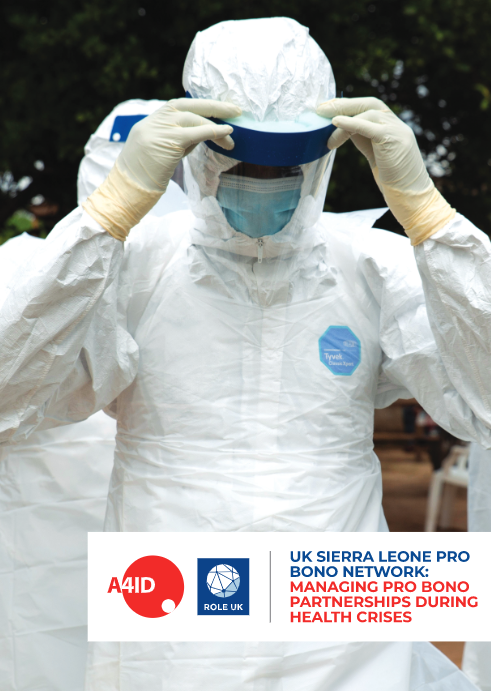
UK Sierra Leone Pro Bono Network: Managing Pro Bono Partnerships During Health Crises
Prior to the COVID-19 pandemic, the ROLE UK Programme supported travel for UK experts to deliver capacity-building training alongside in-country partners. Since the outbreak, both the Programme and its stakeholders have had to strategically adapt to the circumstances and deliver most activities remotely. The Programme has reflected on the opportunities and challenges that have come with the move to online pro bono delivery, launching a peer-to-peer review aimed at sharing best practice with the community. It also analysed the wider implications that the pandemic has had on the rule of law, launching the ‘Rule of Law in Times of Health Crises’ paper. Almost two years after the beginning of the pandemic, the Programme continues to play a central role in coordinating efforts to strengthen the rule of law as stakeholders face the challenges brought about by COVID-19.
This short paper is complimentary to that work and provides guidance to the community of practice with real-world lessons on how to maintain and strengthen their pro bono work during a health crisis. It brings together evidence from the UK legal sector on how the Network responded and adapted its work as Sierra Leone and neighbouring West African countries were struck by the Ebola outbreak. These reflections hope to aid other organisations as they continue to re-evaluate their approach to pro bono work, in the face of the continued challenges brought on by the pandemic. The outcome is a valuable resource for international rule of law actors that will help them to successfully adapt their work during and beyond a health crisis.
Improving the Rule of Law in The Gambia
The Gambia is currently in a transitional period following the democratic election of President Barrow in 2016, ending the Jammeh government which had been in power since 1994. In 2018, The Gambia’s High Commissioner conveyed the importance of the following two years for embedding a trajectory of reform for the country’s justice sector.
A4ID’s ROLE UK Programme has facilitated a peer-to-peer partnership between the Judiciary of England and Wales, and the Judiciary of The Gambia since 2018. Its aim has been to address the current challenges facing the justice sector of The Gambia and, through peer-to-peer training and experience-sharing, to work in collaboration towards tangible and responsive changes.
The Challenges
A major challenge that The Gambia’s justice sector is facing, is the inconsistency in the sentences delivered by magistrates due to a lack of training and guidelines. During A4ID’s scoping visit in June 2018, a trend was identified of a great number of experts trained in the court system leaving to work in the private sector. Another significant challenge identified concerned the functioning of The Gambia’s judicial system: it has as the high number and backlog of appeals. A combination of the automatic right to appeal and a culture of ineffective case management practices, resulted in cases taking far longer to be resolved than seemed just and fair to the appellants seeking justice. Moreover, judges were over-burdened by extremely large caseloads, and the task of processing these cases was worsened by the regular occurrence of power cuts and a lack of material resources. These findings provided clarity in respect of challenges and how they could possibly be addressed by the work of the partnership.
Improving judicial practices in The Gambia through partnerships
Assignment 1
The ROLE UK Programme’s support of this partnership began with a judge of The Gambia’s High Court spending an intensive week at the Commercial Court in London as part of the Standing International Forum of Commercial Courts (SIFoCC) observation programme in September 2018. The trip established peer-to-peer relationships between fellow attending judges from Uganda and Sri Lanka which have endured in the following years through regular communication over ‘WhatsApp’. The Gambian judge is now a member of SIFoCC’s first international working group on case management, co-chaired by the Chief Justice of Australia’s Federal Court and a senior member of the Court of Appeal of England & Wales.
Assignment 2
The partnership’s second assignment consisted of a five-day training programme for all magistrates in The Gambia. This was held in January to February 2019 and delivered by senior judges and representatives from the Commonwealth Magistrates and Judges Association (CMJA). It included training on case management, judicial reasoning and judgment writing. The outcome of this training was not only the sustained and wider-reaching engagement with magistrates and judges in The Gambia, but also the growing public confidence in the judiciary. Moreover, participating magistrates were trained to be coroners, ensuring that they have the skillset required to hear the evidence presented by witnesses and experts involved to competently determine the cause or consequence of somebody’s death.
This training led to the drafting of The Gambia’s first sentencing guidelines on theft, a matter of great importance for the general public. These guidelines were prepared by the Judiciary of The Gambia, and its use is now being supported by the former Chief Coroner from England & Wales who acts as a mentor.
The positive outcomes of The Gambia’s first sentencing guidelines
The outcomes of this ROLE UK Programme-supported training and first sentencing guidelines stretch far beyond the work and lives of the magistrates involved. Having a higher skilled court of first instance will reduce the number of appeals lodged, tackling the backlog and high workload of all judges. Improvements to access to justice through better case management and improved consistency around sentencing will also benefit defendants, the victims, families and the wider community who are affected by the decisions of the courts.
A British judge, Justice Knowles, who delivered pro bono technical expertise as part of the partnership, highlighted the importance of such projects in harnessing critical opportunities to improve the rule of law at moments of political and judicial shake-up, which has been the case in The Gambia. He lauded A4ID for facilitating this expansion of the rule of law; a principle he believes is a “great enabler” of sustainable development, a reality reflected in its inclusion in the UN Sustainable Development Goal 16.
Moving into 2020, the work of the partnership over the previous two years has had ongoing positive impacts. A magistrate who participated in the 2019 training programme affirmed to A4ID that the Judiciary of The Gambia is regularly using the new sentencing guidelines on theft. The magistrate praised the creation of these consistent sentencing guidelines for improving access to justice by ensuring those charged with theft are given proportionate and just sentences. The guidelines are providing greater clarity in the system, speeding up the case processing. During the partnership, work has also expanded to support collaboration between the Judiciary of The Gambia, the Judiciary of England and Wales and UK-based NGO Justice Defenders, to address challenges in the prisons system of The Gambia, particularly the issue of prisoners on remand who are subject to long delays before their cases are heard and lack legal advice to prepare their cases. Recently, the partners involved in this work met online to address the challenges of the Covid-19 pandemic and to plan the upcoming Prison Paralegals Programme, which will train prisoners and prison officers as paralegals to support inmates with bail applications, hearings and appeals.
The partnership facilitated by A4ID’s ROLE UK Programme has proven to be enduring with wide ranging impacts. Cross-national efforts to improve The Gambian’s justice sector and rule of law have been established, ranging from training for magistrates, creation of consistent sentencing guidelines and mentoring relationships established between judiciary peers. This work has been sustained remotely and strives continuously to improve access to justice and the rule of law in line with progressing the achievement of Sustainable Development Goal 16 concerning peace, justice and strong institutions.
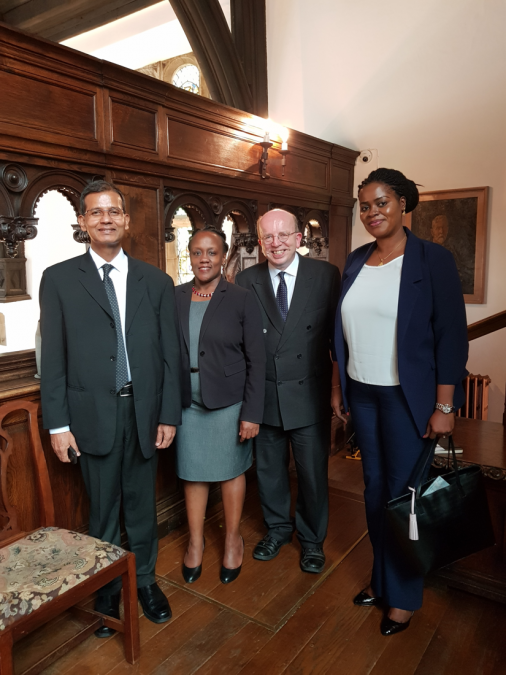
In the photo: SIFoCC Judicial Observation Programme participants visiting the Royal Courts of Justice in London, September 2018. (L-R: Hon. Justice Mahinda Samayawardhena, Sri Lanka; Hon. Justice Anna Mugenyi Bitature, Uganda; Hon. Mr Justice Robin Knowles, England & Wales; Hon. Justice Zainab Jawara Alami, The Gambia)
Launching the World’s First Centralised Ebola Platform
Ebola Platform
A4ID’s partners play a key role in the establishment of a global Ebola data platform to coordinate and improve the detection, diagnosis and treatment of Ebola Virus Disease.
Medical humanitarian organisation Médecins Sans Frontières, one of A4ID’s partners, has successfully supported the launch of a centralised database of clinical, laboratory and epidemiological data concerning Ebola Virus Disease, in conjunction with the University of Oxford’s Infectious Diseases Data Observatory.
The Devastating Impact of Ebola Virus Disease
Between December 2013 and April 2016, over 28,000 cases of the Ebola Virus Disease plagued West Africa, taking the lives of more than 11,000 people, mainly from Guinea, Liberia and Sierra Leone. Despite more than two-dozen outbreaks over the past 40 years, knowledge, treatment options and diagnostic certainty of Ebola remains inadequate. Though the scale and impact of the 2013-2016 outbreak was unprecedented, there remains limited empirical evidence to inform diagnosis, management and follow-up with suspected and diagnosed Ebola Virus Disease patients. This lack of aggregated evidence undermines the ability of the research community to leverage existing knowledge and develop an effective approach to combat the disease.
Despite the absence of a centralised repository for Ebola Virus Disease data, a wealth of clinical, laboratory and epidemiological information has been collected by a diverse range of organisations, including international agencies, national health ministries, local NGOs and individual Ebola Virus Disease treatment units. If appropriately collected and shared, this data could be used to improve responses to future Ebola Virus Disease outbreaks.
Médecins Sans Frontières (MSF) is an international association comprised of over 67,000 team members working in more than 70 countries, providing medical assistance to people affected by conflict, epidemics, disasters, or exclusion from healthcare. The organisation’s international reach ensured that it was well-placed to support the development of an online platform to share some of the wealth of available information surrounding Ebola Virus Disease that has accumulated across the globe.
Establishing the Governing Framework for a Centralised Repository of Ebola Virus Disease Data
MSF approached A4ID for legal advice and assistance with the launch of the platform, specifically to ensure that the platform’s contractual framework was compliant with MSF’s internal policies and the legal and ethical standards relevant to the research field. A4ID connected MSF with international law firm, CMS Cameron McKenna Nabarro Olswang LLP (CMS), who provided essential legal advice to MSF concerning the platform’s Governance Framework and Data Access Terms and Conditions, in addition to the Terms of Submission prescribing the relationship between data contributors and the platform itself. CMS also assisted MSF with contractual negotiations with other platform stakeholders.
Alice Proby, Legal Advisor at MSF, praised the CMS team’s “efficient, flexible, and dedicated” approach to the project, and remarked that their contribution was “highly supportive in the successful establishment of the platform”. The lawyers’ advice was “very succinct” and rendered a complex legal area “accessible and workable”. CMS’ involvement in the project “greatly improved the confidence” of MSF by legitimising some concerns that had previously been raised internally, and also helped to free up valuable time and resources for MSF
The Ebola Data Platform – the first platform of its kind to be established by a collaboration of multiple partners from across the globe – is now up and running.
Stakeholder Support and Avoiding Data Fragmentation
MSF and its partners on this project placed an emphasis on including stakeholders in the main countries affected by the 2013-2016 outbreak in the key decisions surrounding the platform’s development. This inclusive approach is to help ensure that the platform’s data is accessible to those treating patients on the ground, and to improve capacity to conduct research during future Ebola Virus Disease outbreaks.
It is also hoped the platform can mitigate some of the problems of data fragmentation that were encountered during efforts to halt the spread of Ebola Virus Disease in Sierra Leone, Guinea and Liberia as the crisis emerged during 2014. At this time, advisors on the ground observed significant divergence in data collection and recording practices, which hindered efforts at collating and analysing infection and treatment information, and an unwillingness in some quarters to share information internationally. Unifying data collection protocols and broadening access to raw and analysed data will vastly improve attempts to quell future Ebola Virus Disease outbreaks.
Building Capacity for Better Management of Global Health Risks
MSF’s work providing relief to victims of natural and manmade disasters makes a significant contribution to the advancement of the UN’s Sustainable Development Goals (SDGs), and in particular Goal 3, to ensure healthy lives and promote well-being for all at all ages. The related SDG Target 3.D seeks to strengthen the capacity of all countries, in particular developing countries, for early warning, risk reduction and management of national and global health risks. CMS’ pro bono assistance in the establishment of the Ebola Data Platform has contributed towards the attainment of SDG 3 and Target 3.D, while guaranteeing the protection of the rights and privacy of the individuals and communities from where the data originated.