Climate change is the single biggest threat to sustainable development. As this issue becomes more urgent, the role of the international legal community becomes even more important in advancing SDG 13: Climate Action. Law can be a tool for positive change and lawyers have a role to play in tackling climate change. There are legal risks and opportunities arising from the impact of climate change. These impact business operations and society in general. Innovative and leading law firms can lead the transition to a low-carbon economy by helping their clients to identify these. This Guide provides practical advice and actions for lawyers in the fight against climate change.
It is our intention to keep the Chapters as up to date as possible. Please help us to do so by providing feedback or new information which to include in them. Contact us at sdg.legal.initiative@a4id.org
Climate change undermines the ability of all countries to achieve sustainable development.
Balancing environmental and development rights
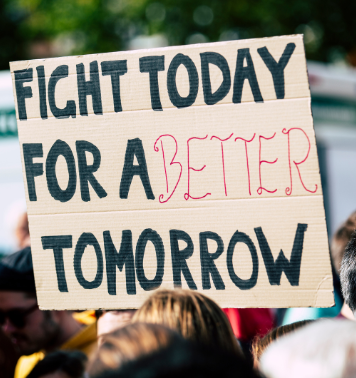
Photo credit: Will Turner on Unsplashed
We have all witnessed instances across the globe where economic development and environmental rights have clashed and resulted in conflict.
Many countries face a complex challenge. On the one hand, economic growth and development have lifted millions out of poverty, created opportunities, and improved livelihoods. On the other hand, this progress has often come at a significant environmental cost—resulting in deforestation, pollution, climate change, and in many instances the loss of biodiversity.
But these two goals do not necessarily have to lead to conflict. In fact, they must go hand in hand. And the legal profession has a vital role to play in ensuring that the law is used as a tool to achieve this balance of protecting the environment while enabling sustainable and inclusive growth.
How do we reconcile the need for economic development and the protection of environmental rights? Does it really have to be this way? Or can we find a better balance?
Human Rights
Environmental rights are human rights – they encompass the right to clean air, safe drinking water, and a healthy environment. These rights are enshrined in international agreements such as the United Nations’ Sustainable Development Goals (SDGs), particularly Goal 13 (Climate Action) and Goal 15 (Life on Land). When these rights are compromised, it is often the most vulnerable populations that suffer.
At A4ID, we work at the intersection of law, sustainable development, and human rights. We believe that legal frameworks can help resolve these tensions ensuring development is not just about economic growth, but it is also about sustainability, equity, and justice.
Striving for balance
So how can we achieve a balance?
Firstly, by strengthening legal frameworks for environmental rights. Law is, after all, one of the most powerful tools we have to protect the environment while promoting sustainable development.
At A4ID one of our primary goals is to connect legal expertise with those who need it most such as non-governmental organisations or NGOs, social enterprises and development organisations that are working on environmental and sustainability issues.
One example is our KAZA programme. The Kavango Zambezi region in Southern Africa is home to some of the most ecologically significant landscapes in Africa, spanning five countries, rich in biodiversity and supporting millions of people who rely on natural resources for their livelihoods. Yet, it’s also a hotspot for the illegal wildlife trade that not only threatens biodiversity, but fuels corruption, results in organised crime and undermines stability.
Legal Frameworks
Through KAZA, we strengthen legal frameworks and build the capacity of judicial actors to combat this crisis. This work is essential because without strong laws and enforcement, poaching and illegal trafficking continue to undermine conservation efforts and sustainable development. By training judges, prosecutors, and law enforcement officers, we ensure stronger prosecutions and tougher penalties for offenders. This programme demonstrates that legal capacity-building can bridge the gap between conservation and sustainable development, ensuring that environmental protection does not come at the cost of economic security, but in fact strengthens it.
Secondly, we do it by advocating for stronger environmental laws. Beyond individual projects, we work with governments, businesses and NGOs to push for stronger legal solutions that respect environmental rights while promoting responsible investment. In some countries, outdated laws fail to hold corporations accountable for environmental damage. In others, legal loopholes allow industries to bypass regulations. A4ID collaborates with legal experts to close these gaps ensuring that laws are strong, enforceable, and fair.
And thirdly we do so, by training legal professionals in Environmental Law. After all, laws are only as effective as the people who enforce them. That’s why we train lawyers, policymakers, and organisations to use legal tools for environmental protection. Many legal professionals want to support sustainability efforts but lack the specialised knowledge. We provide training to equip them with the skills to handle environmental disputes, advise on sustainable business practices, and advocate for stronger policies. This is crucial in regions where environmental laws exist but are poorly enforced due to a lack of resources, expertise, or political will. By strengthening legal capacity, we ensure that environmental justice is not just an ideal but is a reality.
Challenges
Despite progress, significant challenges remain. For instance, there are conflicting Interests: Governments often prioritise economic growth over environmental concerns. Then there is weak enforcement: Even strong environmental laws are often not enforced. And then there is, of course, corporate influence: Large corporations sometimes use legal loopholes to avoid accountability which they can do as they have legal and financial resources at their disposal.
So how do we create a system where environmental rights and development reinforce, rather than undermine, each other?
Collaboration and Innovation
The answer lies in collaboration and innovation. If we truly want to balance these interests, we need a multi-stakeholder approach and we need to be innovative in our thinking. Legal frameworks and policies play a crucial role in striking this balance. Strong environmental laws—when properly enforced—can ensure responsible development.
Here are some examples in Asia:
Nepal’s Environmental Protection Act mandates environmental impact assessments for major projects.
The Paris Agreement provides a global framework for climate action while allowing flexibility for national priorities.
International legal support through organisations like A4ID have the potential to strengthen Nepal’s environmental governance by providing expertise, resources, and capacity-building support.
Collaboration and Innovation also means that:
Governments must create policies that encourage sustainable business models instead of seeing environmental laws as obstacles.
Businesses must adopt responsible and transparent environmental practices not just because the law demands it, but because it benefits them in the longer-term.
Legal professionals must continue to ensure environmental laws are upheld and that those affected by environmental harm have access to justice.
Civil society and local communities must be empowered to advocate for their rights and hold governments and corporations to account.
Legal professionals, policymakers, and advocates, have the power to drive change – the tools, the expertise, and the networks to shape laws that create a future where economic growth and environmental rights are not in conflict.
Development should not come at the expense of environmental destruction. And environmental rights should not mean stopping progress altogether. It’s about finding the right balance and solutions that allow both to thrive.
At A4ID, we are committed to this mission working to ensure legal frameworks support both people and the planet. Find out more about our work.
CEO Insight: SDG 8: Decent Work and Economic Growth
International Labour Day in a Time of Collective Action
The UN Sustainable Development Agenda sets out decent work for all as a 2030 target, stressing job creation as key to eradicating forced labour, slavery, and human trafficking. This target underscores the importance of employment as a driver of social change and sustainable development. However, with a global unemployment rate of 5.8% and 53.1% of the population not covered by social protections, there is still a long way to go before meeting the 2030 deadline.
Labour Day 2023
1st May marked International Labour Day (sometimes referred to as May Day or Workers’ Day), a day to celebrate the working classes and recognise the industriousness that keeps the world spinning. In many countries such as Libya, Kenya, Mauritius, Morocco, Namibia, and Nigeria, Labour Day is recognised as a public holiday, many more celebrate by closing workplaces and holding parades. Historically, this day has signified an opportunity to campaign for decent work and fundamental rights and protections.
The collective action of workers on Labour Day has forced governments to establish extensive labour laws outlining working conditions and minimum expectations for the consultation of workers. Looking towards Europe as an example, EU policy provides a framework of rights and obligations in the workplace, protecting the health and wellbeing of employees by enforcing regulations such as the working hours directive and minimum annual leave requirements. In setting such labour standards, EU policy safeguards economic growth and promotes social cohesion. The existence of the single market further drives the need for such protections, blocking the potential for a race to the bottom in labour standards across Europe. EU Labour Law sets minimum standards for over 240 million workers, however individual member states can set further regulations or offer extended benefits.
Legal action taken by unions has led to some countries banning certain gig economy employers. A landmark case in UK Labour Law, Uber v Aslam, held that Uber must recognise drivers as employees entitled to minimum wage and holiday pay. This is just one example of how stringent labour laws can protect employees, alongside legal support offered by Unions.
In the UK alone, inflation reached 9.2% in 2022, the highest ever recorded, while domestic gas prices increased by 129%. Despite unprecedented inflation, many saw their salaries remain the same, effectively awarding them a real-wage pay-cut. In response, the UK has seen consistent strikes from May 2022 to the present day. The strikes, sparked by the National Union of Rail, Maritime and Transport Workers (RMT) transformed into a national campaign – Enough is Enough! – wherein workers demanded real pay rises, reduced energy bills, an end to food poverty, decent housing for everyone, and increased taxes for the richest in society.
Strikers were joined by transport unions, postal workers, junior doctors, ambulance workers, telecommunications staff, university lecturers, refuse workers, and other industries. Particularly relevant to the legal community were the barrister strikes, which started in September 2022. According to the Criminal Bar Association (CBA), the real wage of barristers fell 28% over two decades, with salaries averaging £12,200 for the first 3 years in the profession. Since 2017, 25% of qualified barristers have left the industry, with a further 25% planning to quit. The consequences of these conditions mean a massive backlog of cases are yet to go to court. Following the strikes, barristers across the country voted to accept a 15% increase in criminal legal aid fees, proving the effectiveness of direct action in bargaining for improved working conditions.
Policy recommendations
In response to worsening living conditions, some countries have implemented policy changes in order to improve worker wellbeing and avoid burnout. South Africa, Belgium, Iceland, and Japan implemented 4-day work week policies resulting in ‘improved productivity’, ‘better team culture’, and less burnout. Trials of the 4-day work week were based on employees receiving 100% of their pay, for working 80% of the time, and delivering 100% of their usual output. A mass trial of the 4-day week policy in Australasia observed a 44% average reduction in absenteeism and a 9% reduction in resignations. The implications of this show that improved employee wellbeing leads to more productivity and a generally stronger workforce; supporting this policy recommendation at a national level could help rejuvenate workforces.
How can the legal community support workers’ rights?
In times of crisis, the legal system should be a champion for those who are persecuted. As the world adapts to life beyond COVID-19 and responds to the persistent threat of global warming, employers evolve to utilise new working practices. But as workplaces change so must legal frameworks. As the prevalence of transnational companies increases, transparency laws must ensure supply chains are clean, stamping down on child labour and preventing a global race to the bottom in labour standards. Furthermore, trade unions must be supported by the rule of law in attaining inflation consistent pay rises and upholding anti-harassment and discrimination laws.
Lawyers and legal experts are key in shaping and upholding legislation that supports job creation and ensures the safety and rights of workers. While employment lawyers must continue to defend labour laws, commercial lawyers must work with business clients to create safe and equitable workplaces. Law firms can work together to make their pro bono work more strategic, aligning with the SDG agenda ensures law firms are working towards joint goals, while the SDG 8 targets outline what must be done to provide decent work for all.
A4ID’s Legal Guide to SDG 8: Decent Work and Economic Growth is now available to read, an in-depth manual for lawyers looking to support workers’ rights and pursue the achievement of the SDG agenda by 2030.
Workplaces have the power to give us a sense of purpose, productivity and worth, but they are also institutions of inherent power imbalance. SDG 8 focuses on the role of workplaces and the wider economy to create greater growth and prosperity, harnessing the potential of our people for a sustainable future built by, and for, everyone. By providing access to economic opportunities, workplace protections, and fair pay, countries can promote greater social mobility, combat poverty, and improve the working and living conditions for the most vulnerable in their society.
It is our intention to keep the Chapters as up to date as possible. Please help us to do so by providing feedback or new information which to include in them. Contact us at sdglegalinitiative@a4id.org
The law acts as a protector in times of crisis and it is through it that we can hope to achieve prosperity post-pandemic and beyond. The role of lawyers in establishing the ‘new-normal’ for workplaces across the globe, in combating exploitation in all its forms and securing economic growth will be at the heart of these changes.
SDG 17: Legal Guide to the SDGs
The SDG Agenda is a global agenda. It does not belong to a single State, party or person, but is a universally agreed set of priorities, goals and indicators that will require coordinated efforts to succeed. To do so, SDG 17 acts as a bedrock upon which this principle rests; that no global objective can be achieved without the combined action of international and regional organisations, national governments, civil society, NGOs and the private sector. To make this shared vision a reality, SDG 17 calls upon all stakeholders, including the legal profession, to draw on their expertise and position to make progress towards the other SDGs.
It is our intention to keep the Chapters as up to date as possible. Please help us to do so by providing feedback or new information which to include in them. Contact us at sdg.legal.initiative@a4id.org
Strengthening access to justice notably involves raising awareness about legal rights as well as legal aid services to overcome financial obstacles to access to justice.
SDG 16: Legal Guide to the SDGs
SDG 16 is both an objective and a catalyst for all the SDGs. Without peace, justice, and inclusion, achieving goals such as ending poverty, ensuring education, or promoting economic growth is difficult or impossible to sustain. Supporting and promoting SDG 16 brings the promise of many desirable consequences. Peaceful and just societies, based on the rule of law, are likely to have effective, accountable, and inclusive institutions, that protect human rights and drive the type of development that is truly sustainable.
It is our intention to keep the Chapters as up to date as possible. Please help us to do so by providing feedback or new information which to include in them. Contact us at sdg.legal.initiative@a4id.org
Strengthening access to justice notably involves raising awareness about legal rights as well as legal aid services to overcome financial obstacles to access to justice.
SDG 6: Legal Guide to the SDGs
Access to water and sanitation are recognised by the United Nations as human rights, reflecting the fundamental nature of these basics in every person’s life. Lack of access to safe, sufficient and affordable water, sanitation and hygiene facilities has a devastating effect on the health, dignity and prosperity of billions of people, and has significant consequences for the realization of other human rights. This Guide gives an overview of the legal instruments relevant to the topics of access to water and sanitation, as well as highlighting the legislation and policies adopted by regional organisations and national governments, and relevant cases and proceedings related to access to water and sanitation.
It is our intention to keep the Chapters as up to date as possible. Please help us to do so by providing feedback or new information which to include in them. Contact us at sdg.legal.initiative@a4id.org
Lack of access to safe, sufficient, and affordable clean water, sanitation, and hygiene facilities has a devastating effect on the health, dignity, and prosperity of billions of people the world over..
SDG 5: Legal Guide to the SDGs
Securing gender equality rights in every aspect of life is essential to achieving a just and sustainable world. Gender inequality arises from established and often institutionalised cultural beliefs and behaviours that play out at personal, societal, institutional, and political levels. Strong legal frameworks establish the equality standards that institutions and society at large must uphold and provide a firm basis for policies aiming at improving the circumstances of women and girls. This Guide provides practical advice and actions for the global legal community in working towards the achievement of gender equality universally.
It is our intention to keep the Chapters as up to date as possible. Please help us to do so by providing feedback or new information which to include in them. Contact us at sdg.legal.initiative@a4id.org
The discrimination and the disparities in how people of different genders are treated, and the opportunities they are afforded, cut across all the Sustainable Development Goals.
SDG 4: Legal Guide to the SDGs
Quality education is fundamental to sustainable development. Education is the one of the most powerful tools by which people can lift themselves out of poverty and fully participate in their communities. SDG 4 sets specific targets to address the challenges of achieving quality education universally, and provides a comprehensive framework to reaching inclusive and equitable quality education for all. Beyond enrolment rates, SDG 4 puts a welcomed emphasis on quality education and learning outcomes. This Guide takes a deep dive into how the law can play a large role in achieving SDG 4.
It is our intention to keep the Chapters as up to date as possible. Please help us to do so by providing feedback or new information which to include in them. Contact us at sdg.legal.initiative@a4id.org
Education is the one of the most powerful tools by which people can lift themselves out of poverty and fully participate in their communities.
CEO Insight: SDG 5- Closing the Gender Pay Gap
The legal community can play a crucial role in eradicating the pervasive gender pay gap, a nuanced issue that affects all women.
Credit: Kelley Lynch/WorldBank
8 March saw the annual acknowledgement of International Women’s Day. A day where the global community celebrates women’s socio-economic and cultural achievements and recognises the ongoing struggle for equality that is still being fought by women around the world. This year’s theme ‘Embrace Equity’ identifies that indicators of gender equality, like access to education, health, politics, and the judicial system, vary for each woman, according to their circumstance. The global community must embrace inclusivity and bridge the gaps that make it so much harder for women of colour, working class women, women with disabilities, trans women, and all those experiencing marginalisation to succeed in an already unequal world.
Sustainable Development Goal 5 calls for universal Gender Equality by 2030. The Goal focuses on ending discrimination, exploitation, and violence against women, and ensuring women are offered opportunities and encouragement equal to men. The Goal also acknowledges the gender pay gap, with Target 5.5 focusing on the role of women in managerial and political positions as an indicator of women’s participation.
This month, I would like to explore the pervasive gender pay gap and the part each of us can play in reducing it. The gender pay gap is a nuanced issue that affects women in different ways due to the misunderstood nature of the ‘unexplained’ or ‘hidden’ gap. I hope that in bringing some light to the ways in which women are unfairly treated, the legal community will readily engage in the pursuit to eradicate the gender pay gap, as outlined in #SDG5 and #SDG8.
The Visible Gender Pay Gap
SDG 8.5 demands ‘equal pay for work of equal value’ by 2030. This aspect of the gender pay gap, where women are underpaid despite their labour market value being equal to that of men, is easy to observe through available data.
The European Commission, in its 2021 report, identified a gender pay gap of 12.7%, despite pay discrimination being enshrined in the European Treatise since 1957. Women would need to work 1.5 months extra a year in order to make up for this difference. Despite this, education statistics remain in women’s favour – 81% of young women reach secondary education compared to 75% of men, and women represent 60% of university graduates. However, post education, women make up only 8% of top companies’ CEOs.
A portion of the pay gap can be understood through the overrepresentation of women in low-paying sectors. Generally, classically feminised careers tend to be undervalued. For instance, women make up 80% of health and social work employees, an industry paid significantly less than other male dominated sectors, despite accounting for approximately 3.4% of global employment.
While women are slowly diversifying to less feminised careers, the pay gap remains; the legal sector, a highly male dominated industry, still sports a pay gap of 25.4% in the UK. Furthermore, the transition to different sectors isn’t fast enough to match global trends. The UN predict that by 2050, 75% of jobs will be related to STEM (Science, Technology, Engineering, and Mathematics), while today, women hold just 22% of these positions. To understand why women still make up such a large part of low-paid industries, we must look at the driving forces behind these statistics.
The ‘Unexplained Pay Gap’
The ‘unexplained pay gap’ refers to imperceptible phenomena that affect the pay gap and are not easily understood through data. While women make up a large portion of university graduates and pay discrimination is illegal, women are still earning significantly less than men. To understand this difference, we must understand the cultural and societal expectations of women.
Globally, women are disproportionately assigned to be primary caregivers, spending on average 2.5 times as many hours on domestic work as men. This data varies significantly according to region – for example, in Pakistan this number is hugely inflated, with women undertaking 11 times the unpaid care and domestic work that men do. This generally means that women are taking significantly more career breaks in order to facilitate maternity and child care. Beyond this, women tend to hold part-time or flexible hours positions so they are able to prioritise child-care responsibilities.
The burden of unpaid family responsibilities falling to women forces them to take career breaks and obtain jobs that allow them to continue their child-care responsibilities alongside work. This phenomenon, referred to by Arlie Russel Hochschild as The Second Shift, is a cultural norm whereby women are expected to carry out hours of unpaid domestic labour, hindering their availability for paid work and career progression. In 2010 a Swedish study found that for every month of parental leave used by fathers, the mother’s wages increased by 7%, evidencing the benefits of shared familial burden. Additionally, the EU have found that differences in countries’ childcare provision policies correlate with the pay gap.
Furthermore, in STEM fields, where a growing number of women are graduating, even from the point of entry into their field women’s wages lag behind men’s of the same skillset, with the gap only widening over time. More research must be done into the challenges women face when trying to obtain jobs and advance in traditionally male dominated fields. For instance, when presented with a negotiable salary range, women are more likely to ask for the lower salary than men, perpetuating inequalities. If we again turn to Europe as an example, when accounting for career breaks and part-time work carried out by women, the lifetime gender-pay gap becomes 40%.
How Does this Affect Society?
The societal effects of women still being underpaid are numerous and the pay gap follows women into retirement. For example, women in United States retire with 30% smaller retirement pot than men. During their lives, women have generally poorer access to health care, welfare, and education, and are effected by the stress related effects of financial insecurity. During the Covid-19 pandemic, whilst women were generally at the forefront of the virus – dominating health care and public facing roles – fewer women were protected by government funded support such as income protection or furloughing schemes. This is because these schemes were not as readily available for domestic or part-time workers.
Furthermore, the unadjusted pay gap does not take into account bonus payments, seasonal payments, or commission. These are all things that are more difficult to attain when prioritising child-care responsibilities alongside work. It is clear that the gender pay gap needs to be considered in the greater context of gender inequality, rather than as a statistic. The societal benefits of addressing the gender pay gap are extreme, with the OECD predicting that by closing the gender pay gap, women’s earnings could increase by $2 trillion – money that would be circulated back into the economy.
Lower salaries and less stable incomes deter women from owning property or being active economic contributors. In some countries women are completely excluded from financial independence. For example, women in developing nations are 6% less likely than men to have a bank account. Also, there are still 72 countries globally where women are not allowed to open a bank account. Further, women-owned businesses in developing nations find it difficult to obtain credit or business loans due to their lack of financial collateral such as ownership of land or other financial resources. The World Economic Forum findings indicate that 80% of women-owned businesses have credit needs that are unserved or underserved. These global inequalities underscore the importance of equity in the pursuit of pay parity.
Solutions
The International Labour Organization found that economies increasing gender participation results in significant economic growth. The current underrepresentation of women in high paying roles excludes them from decision making, land ownership, and creates a cycle wherein women are prevented from reaching their potential. In order to meet the 2030 global agenda for Sustainable Development, gender parity in the workplace is essential.
The World Economic Forum has estimated it will take 151 years to close the gender pay gap if current trends are to continue. However, taking into account the ‘unexplained gap’, gender parity could be reached sooner if actions are taken now. In December 2022, the European Parliament agreed on a directive to make salaries more transparent, giving employees the right to access ‘sex-disaggregated’ data if the organisation employs over 100 people. Lawyers can play an essential role in ensuring transparency in organisations, helping to put this directive into practice across the EU and supporting female workers when they are proven to be underpaid.
Furthermore, in 2021 the European Commission produced a proposal for gender parity that included a work-life balance directive, ensuring companies made it easier for both parents to attend to family responsibilities; a European care strategy to support this; and a directive ensuring 40% of board-members should make up the company’s underrepresented sex.
Studies have shown than when an organisation has more female managers, the pay gap tends to be smaller. As reasoned above, women are often held back from progressing into managerial roles contributing to an underrepresentation of women in leadership; companies should make it a priority to support women into these positions, in order to perpetuate equal pay.
Governments must invest in childcare policies, allowing women to focus on their careers without the burden of unpaid care work. Likewise, companies should allow for men to take parental leave and offer flexibility of working for both genders, in order for families to share childcare responsibilities more easily.
As a business or organisation there are practical steps Law Firms can take:
Promote a gender inclusive business culture
Implement transparent pay structures and reviews
Base pay on the position itself rather than on the employee’s previous pay
Provide a more flexible working culture enabling women to access higher-level jobs
Share results with other organisations such as EPIC
Law Firms and General Counsel have a crucial role to play in enabling these solutions. When advising clients, they can ensure that their clients are adopting these policies that encourage equitable gender pay. By suggesting and drafting clauses within contracts, legal professionals can ensure that organisations are becoming gender equitable workplaces. There is also an opportunity to work with governments to draft legislation and policy that encourage organisations to adopt gender equitable business practices. Joining A4ID’s Pro Bono Brokerage gives legal professionals an opportunity to get involved in such valuable projects.
Strengthening Child Protection in Paraguay
With the aim to improve child protection practices in Paraguay, Strengthening Families for Abandoned Children have partnered with Paraguay Protects Families and the Government of Paraguay with support from A4ID’s ROLE UK Programme.
Legal barriers to child protection in Paraguay
Paraguay has a large proportion of young people, with around 35% of the population being under 14 years of age. Due to many factors, thousands of these Paraguayan children and adolescents face protection issues. These factors include the widely accepted use of corporal punishment, high levels of poverty resulting in many children on the street and a lack of a quality judicial system that does not put the best interest of the child at the centre. Resulting protection issues include neglect, sexual exploitation, trafficking and child labour. Many children are at high risk of abuse within their family and are at risk of being removed from their homes. In addition, over 90% of children without parental care are in institutions, far from their communities of origin, and only an average of 5% live in accredited foster families. There are also children who are ‘lost’ or ‘forgotten’ in the court system.
The Government of Paraguay has taken several steps that display its commitment to improving child protection laws. Notably, the Paraguayan Government has ratified the Convention on the Rights of the Child (1990) and adopted national legislation, such as the Children’s Code (2001), to integrate the principles of the Convention into national law. Paraguay has also become a ‘Pathfinder’ country, which means that it is committed to accelerated action towards target 16.2 of the Sustainable Development Goals (SDGs) to ‘end abuse, exploitation, trafficking and all forms of violence against and torture of children’.
Despite national commitments, child protection issues remain prevalent and often children’s needs are inadequately met. This is reflective of the lack of effective coordination between the key stakeholders responsible for safeguarding vulnerable children, the weak implementation of laws, a dearth of specialised training and lack of funding for child protection services, among other challenges.
Improving child protection practices in Paraguay through partnerships
The partnership between Strengthening Families for Abandoned Children (SFAC), Paraguay Protects Families (PPF) and the Government of Paraguay works to strengthen legal systems and processes which safeguard the rights of vulnerable children. SFAC is a UK-based charity committed to the promotion of children’s right to family life and the right to a fair trial. PPF is a civil society movement promoting family-based care for Paraguayan children and works alongside the Paraguayan Government in learning and applying best practices and models of child protection. Through its partnership with PPF and the Government of Paraguay, SFAC have provided training to various Paraguayan stakeholders since 2013.
A4ID’s ROLE UK Programme began providing financial and strategic support to the SFAC-PPF partnership with the Government of Paraguay in October 2018. As part of a three-year project to provide support to the deployment of legal and judicial experts in children’s rights to Paraguay, the Programme has supported the partnership with two assignments.
Assignment 1
The initial assignment involved two senior family and childcare lawyers from the UK providing training to 400 Paraguayan judicial and senior government counterparts. The topics included increasing awareness about the role of the judiciary in the care and protection of children, and the importance of the judiciary’s considerations of the impact of its decisions on children. This assignment opened the space for the Paraguayan judiciary to be involved in the movement for improved care and protection of children. It was the first time that judges, prosecutors and public defenders were brought together to focus on this issue.
Most of the participants said that the trainings were applicable to the Paraguayan context and that they could apply the lessons learnt to their practice. In addition, feedback from PPF suggested that the public defenders, public prosecutors, judges and members of the Ministry of Children who had received the trainings were interested in continuing to cooperate after the assignment.
The November 2018 training led to a Declaration of Commitment to ‘Best Practices in the Judicial Process of Protection and Care for the Child’, signed by the Supreme Court of Justice, the Office of the Public Prosecutor, the Ministry of Defense Public and the Ministry of Children and Adolescents in April 2019. Following this, the Paraguay Ministry of Children decided to carry out a national review of the child protection and care system from August to December 2019.
Assignment 2
A4ID’s ROLE UK Programme and SFAC provided technical and financial support for the national review and the analytical phase was completed in December 2019. The results of the review were presented at a high-level Summit in the same month by the Ministry of Children and Adolescents, the Ministry of Public Defense, the Supreme Court of Justice, the Office of the Public Prosecutor and the High Authorities of the System to the Government of Paraguay. At this Summit, the partnership’s work progressed significantly, leading to an inter-agency framework for the management of child protection cases being ratified. This was a significant milestone, suggesting future interagency cooperation regarding court proceedings for child protection cases.
During the Summit, the SFAC-funded specialist and children’s lawyer, Ruth Sharon, led the creation of a roadmap that highlighted short- and long-term improvements to restructure the care system throughout the country. The roadmap included the development of a unified guidance manual of functions and procedures and the development of control and monitoring mechanisms for children’s rights with standardised criteria. This roadmap represents a strong platform from which the sustainability of the reforms supported by A4ID’s ROLE UK Programme can be optimised.
Lessons Learned
Whilst knowledge of context is paramount, it can often be difficult to identify the changes needed from an ‘insider’ perspective Judicial, government and legal participants at the Summit stressed the usefulness of the critical ‘outsider’ perspective provided by Ruth Sharon. In highlighting what could be done to improve child protection services, all the relevant stakeholders could move towards the creation of a roadmap with the government with efficient solutions and achievable improvements for the care system. This would primarily ensure that the child is the central focus of child protection policies and practice.
By continuing to provide key strategic and financial support, the partnership strives in the long-term to empower Paraguayan courts to make judgments which promote and protect the 35% of the population composed of children. It also seeks to ensure that children’s rights are paramount in every decision made about their safety and welfare, particularly in relation to their right to live as a family. This thereby contributes towards SDG 16.2 and the UK Foreign, Commonwealth and Development Office’s equality and social justice rule of law pathway.