Viewing archives for Kenya

CEO Insight: Law, Justice, and the Eradication of Poverty


A young boy in a classroom turn away from the blackboard smiling

“Poverty is a denial of human rights for every individual. Indeed, poverty is utterly appalling.”

When Kofi Annan spoke these words in 2002, he captured a truth that remains as urgent today as it was two decades ago. As we mark the International Day for the Eradication of Poverty today on 17 October, we are reminded that poverty is not only an economic condition it is a profound injustice that undermines human dignity and opportunity in every form.

Officially recognised by the United Nations in 1992, this day stands as a call to action: to stand in solidarity with those who continue to experience hardship, exclusion, and inequality. At A4ID, we believe that the law is one of the most powerful tools to address this injustice. Law shapes systems, enforces rights, and creates opportunities where once there were none.

Two decades of justice in action

Next year marks A4ID’s twentieth anniversary – two decades of partnership, perseverance, and purpose. Born from a simple but radical belief that the law can be a force for sustainable change, A4ID has brought together lawyers, development organisations, and innovators to tackle some of the world’s most complex challenges.

As we approach this milestone, one lesson stands out clearly for me: when people and purpose align, the law can transform lives.

After the 2014 Ebola outbreak, A4ID partnered with Médecins Sans Frontières (MSF) to help establish the world’s first Centralised Ebola Platform. Through legal insight and innovation, we supported the development of an app designed to improve coordination and response during future health crises – a reminder that law, when applied creatively, strengthens the systems that safeguard life.

In Kenya, our collaboration with Still I Rise helped establish the world’s first free international school for refugee children. Through pro bono legal expertise, from navigating education regulations to preparing Ministry submissions – we helped turn a vision into reality. Those children now have access not just to education, but to hope, belonging, and a future.

Each of these milestones affirms a truth that continues to guide A4ID’s mission: the law, mobilised in service of humanity, is an engine of justice.

A blueprint for a fairer world

In 2015, 193 countries adopted the Sustainable Development Goals (SDGs) – an ambitious global framework for creating more equitable and sustainable societies. For many, they represent policy aspirations; for A4ID, they are a moral imperative.

Every one of the 17 Goals depends on the rule of law – from eradicating poverty and hunger, to advancing gender equality, climate action, and peace. The law provides the scaffolding that makes progress possible. Without it, implementation falters; with it, societies can create the enabling conditions for people and planet to thrive.

From eradicating poverty to building sustainable futures

As we move toward our twentieth year, A4ID’s mission continues to evolve in response to a rapidly changing world. Our commitment to justice remains constant, but our understanding of poverty has deepened. We now see it not only as a lack of income, but as a systemic and multidimensional deprivation – inseparable from questions of sustainability, equity, and governance.

Our ambition is clear: to inspire and enable lawyers to mobilise at scale, ensuring that those designing and delivering solutions to global sustainability challenges have the legal support they need.

In essence, A4ID’s work is shifting from the eradication of poverty to the cultivation of conditions where poverty cannot take root again.

Understanding multidimensional poverty

Poverty is not defined solely by material lack, but by the absence of choice, opportunity, and dignity. The Multidimensional Poverty Index (MPI), developed by the UN and Oxford’s Poverty and Human Development Initiative, captures this broader reality – encompassing deprivations in health, education, living standards, and access to services.

A child may go hungry, study by candlelight, and walk miles for water – each deprivation reinforcing the next. This is the essence of multidimensional poverty: overlapping disadvantages that trap individuals and communities in cycles of exclusion.

Today, these challenges are intensified by what many describe as a global polycrisis – the convergence of economic, environmental, social, and political disruptions. Climate change fuels displacement and hunger; conflict erodes education and healthcare; inequality corrodes trust and democracy. These are interconnected crises that demand interconnected solutions.

Law as a bridge for sustainable solutions

The SDGs offer that integrated framework. They link social progress, environmental protection, and economic resilience – reminding us that justice in one area depends on justice in all others.

For A4ID and our partners, this is where law finds its defining role. Sound legal systems underpin good governance, protect human rights, and create the enabling environment for sustainable development to take root. They turn good intentions into lasting frameworks for change.

Through partnerships across continents, A4ID continues to connect pro bono legal expertise with development needs – transforming the principle of solidarity into practice. In doing so, we help bridge the gap between policy ambition and tangible impact, demonstrating that law is not static regulation but a living force for possibility.

Empowering prisoners to represent themselves

Around 40% of the prison population in Kenya are held on remand without access to a fair trial.  They can remain in prison for years – a decade is not uncommon. According to a UNODC report, prisoners who are poor, have low levels of literacy and low levels of education are forced to navigate the judicial system alone where they encounter a complex labyrinth of laws, traditions, copious paperwork and restrictive time limits.

Compounded by the fact that legal aid at state expense is limited to those charged with capital offences, the poor are disproportionately more likely to remain in custody beyond constitutional limits

While Kenya has made good progress towards realising the rule of law, enhancing opportunities for men and women to receive representation and a fair hearing has the potential to resonate more widely on the political spectrum and increase momentum towards fairer and more just practises, thus strengthening the rule of law.

The African Prisons Project (APP), is an organisation that works to reform the criminal justice system to rehabilitate and empower prisoners, in order to reduce the number of prisoners on remand.  APP applied to ROLE UK seeking legal support to produce manuals for bail and appeals procedures, that also looked at alternative dispute resolution methods.   The manuals are intended to allow inmates to better represent themselves and each other, leading to fewer detainees.  They will also help prevent the initial incarceration of people accused of petty crimes and help divert people from a custodial sentence where it becomes more difficult to be heard.

The project aims to improve access to justice for prisoners, one of the most poor and marginalised groups, and thereby falls directly under ROLE UK’s work on improving equality and social justice.

ROLE UK supports Rule of Law assignments that are strategic in their design.  In this instance, ROLE found evidence that Coulson Harvey, a Kenyan law firm, The Law Society of Kenya, the Kenya School of Law and the Attorney General’s National Legal Aid and Awareness Programme (NALEAP) had all pledged various levels of support and involvement to the project and to wider reforms, demonstrating a larger political will and sound momentum for change. 

In addition, APP had already secured funding for the project from the Clifford Chance Foundation, along with commitments from other UK law firms to mentor students and establish legal aid clinics.  ROLE supports such collaborative approaches as they help ensure that projects are sustainable in the long run.

ROLE enabled three UK legal specialists, Tom Dunn, Director of Pro Bono at Clifford Chance, Lucy Stoy and Andrew Murn, experienced international litigators to gauge the scale and extent of the work going on, visit the sites, engage directly with the staff and prison inmates first-hand, advise on the scope of the project and help develop the legal manuals.

Our specialists found this direct, peer-to-peer approach extremely valuable, stating that it allowed them to reflect on the capacity of those who would eventually use the manuals with much greater accuracy, thereby enabling them to develop the most tailored resources. 

Feedback from Kenyan stakeholders illustrated that the visit was crucial in enabling justice system stakeholders to meet and deliberate on the best possible way forward. The fact that the UK experts visited the project sites, were familiar with domestic laws, met and engaged with the beneficiaries and crystallised working relationships with local partners was seen as genuinely facilitating progress by the Kenyans. 

“It is very good to see the UK team went through the materials sent beforehand. This greatly helped both UK and Kenya teams move ahead on the assignment from a point of understanding of Kenya Statute Law, policies and case law.”

-African Prison’s Project

Improving accountability among public officials

Complaints about maladministration in the public sector have become increasingly common in Kenya. Public officials are responsible for a variety of decisions that include whether someone is entitled to an ID card or to vote, whether their child is admitted to secondary school, or whether they get a business licence. Decisions are also made about whether a person may build in a certain place and what building standards must be respected. Equally, they could be about allocating land, extending leases or closing businesses. Mistakes or misconduct in such decision-making, disproportionately affect people who are too poor to challenge administrative decisions in court.  This poses a problem of access to justice.

An improvement in adherence to administrative law principles represents a real and practical gain for the Rule of Law. The Katiba Institute, a Kenyan organisation working to ensure implementation of Kenya’s 2010 Constitution believes that increasing Kenyan officials’ awareness of their constitutional duties will enable them to make decisions that are lawful, reasonable and procedurally fair.   In conjunction with other capacity building initiatives, a partial solution may therefore lie in developing adequate training resources.

ROLE UK supports Rule of Law projects that are rooted in the needs and priorities of end-users, that solve specific problems and are strategic. In this instance, the Katiba institute wanted external experts to help develop administrative law training resources including a Kenyan version of the UK’s Judge Over Your Shoulder (JOYS) manual; a publicly available guide to administrative law aimed at civil servants without a background in law.  As Bingham Centre research has shown, the use of the JOYS manual as a model by other countries has contributed to improved decision making and there has been strong support for the initiative amongst key Kenyan actors, such as the Ombudsman.  The initiative also aligns with other projects intended to strengthen the responsiveness and accountability of government in Kenya.

This assignment is part of a larger programme, part-funded by the FCO Magna Carta Partnership, supporting the work of the Bingham Centre for the Rule of Law in London, and by a Swedish foundation supporting the work of the Katiba Institute in Nairobi.

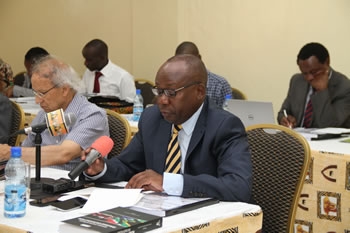
Working with the Bingham Centre for the Rule of Law, ROLE secured the involvement of two specialists to contribute to a high-level consultation convened by Katiba Institute. Steven Bramley has many years’ experience providing legal advice within the civil service and conducting legal awareness training.  He has also been at the forefront of legal awareness programme redesign in recent years and is the Legal Director at the UK Department of Communities and Local Government.  Cora Hoexter is a South African academic and a leading expert on administrative law in the jurisdiction. She has contributed to the reform of South African administrative law via the South African Law Reform Commission and to recent Kenyan administrative law reforms. 

Our specialists provided their knowledge, time and skills pro bono at the consultation which brought together Kenyan public bodies and foreign experts to discuss how a civil service guide could be devised to help implement the right to “fair administrative action” in the 2010 Constitution of Kenya.

Feedback indicates that the Bingham Centre and ROLE specialists shared their knowledge in a way that was relevant to the Kenyan audience. They judiciously pointed out the weaknesses and strengths of the UK model, highlighted points of similarity and made suggestions on how efforts to promote administrative justice in Kenya could benefit from lessons learned in their respective jurisdictions.  They provided advice on a peer to peer basis and did not advocate any particular solution. This approach empowered the Kenyans to make their own decisions about what solution fit them best.

The Kenyan School of Government and the Public Service Commission, which together are responsible for recruiting and training a large proportion of civil servants, have since said that will use Katiba’s “Kenyan JOYS” to train public officials and improve administrative decisions.

Our project was enhanced by ROLE UK who enabled us to invite senior UK and overseas experts with decades of experience in administrative justice.  Both experts more than lived u​p to the strong credentials on the basis of which they had been invited. – The Bingham Centre for the Rule of Law